
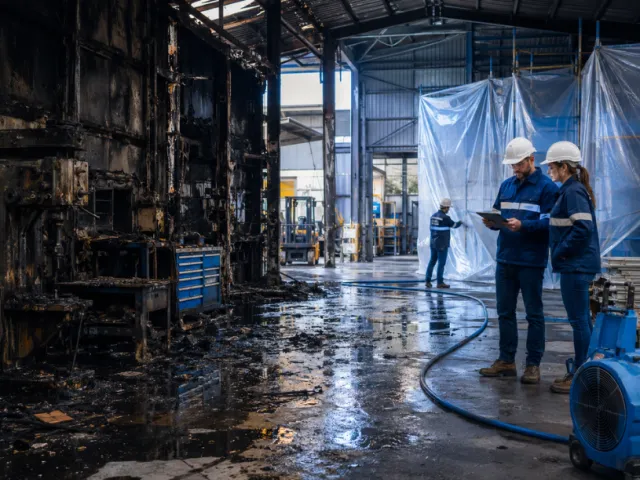
A commercial fire can undo years of hard work in a matter of minutes. Once the smoke clears, the question every owner asks is the same: how long does business fire recovery actually take?
There’s no single answer. Recovery can take as little as a few weeks for minor smoke and stock damage, or 12–24 months for a total loss requiring a full rebuild. What determines how long it takes to recover after a fire is a mix of damage severity, insurance preparedness, and the speed of the claims process.
As an insurance broker Australia businesses turn to when things go wrong, Global Insurance Solutions works with owners navigating exactly this situation every day. This guide breaks down a realistic fire recovery timeline for businesses, the factors that speed it up or slow it down, and what you can do now to protect your business before disaster strikes.
Understanding the Business Fire Recovery Timeline
Commercial fire damage recovery time varies enormously between businesses that experience a fire of similar size.
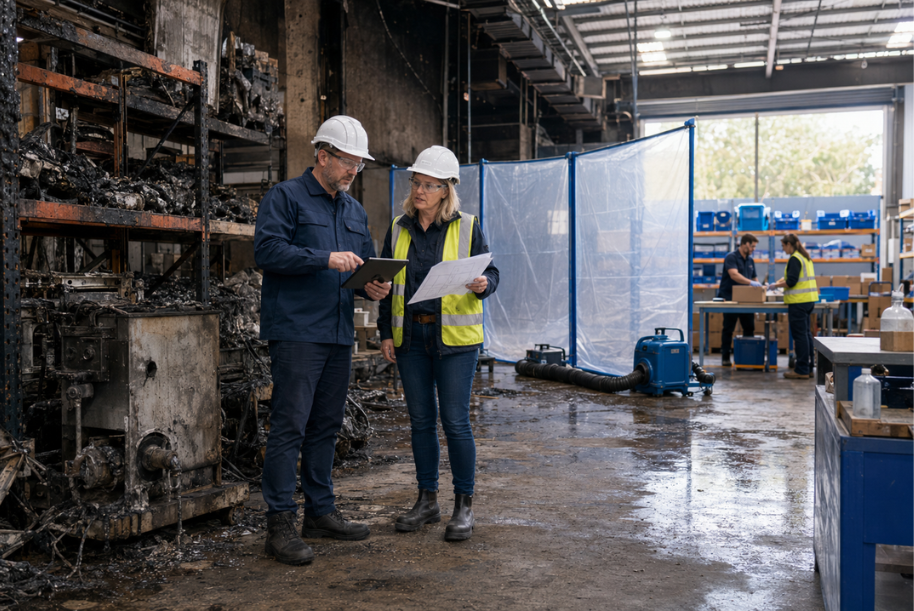
One reopens within weeks; another is still rebuilding a year later. The difference usually comes down to:
- Whether the business held adequate commercial fire insurance in Australia and business interruption cover
- How quickly the fire damage insurance claim was lodged and assessed
- The extent of structural, stock, and equipment damage
- Whether a business continuity plan, supported by appropriate business continuity insurance, was already in place.
- Access to temporary premises, equipment, or suppliers
Understanding these variables sets realistic expectations — and shows exactly where preparation makes the biggest difference to business recovery after a fire.
Businesses affected by the risks of business underinsurance may face significant funding gaps during rebuilding.
Key Factors That Affect How Long It Takes to Recover After a Fire
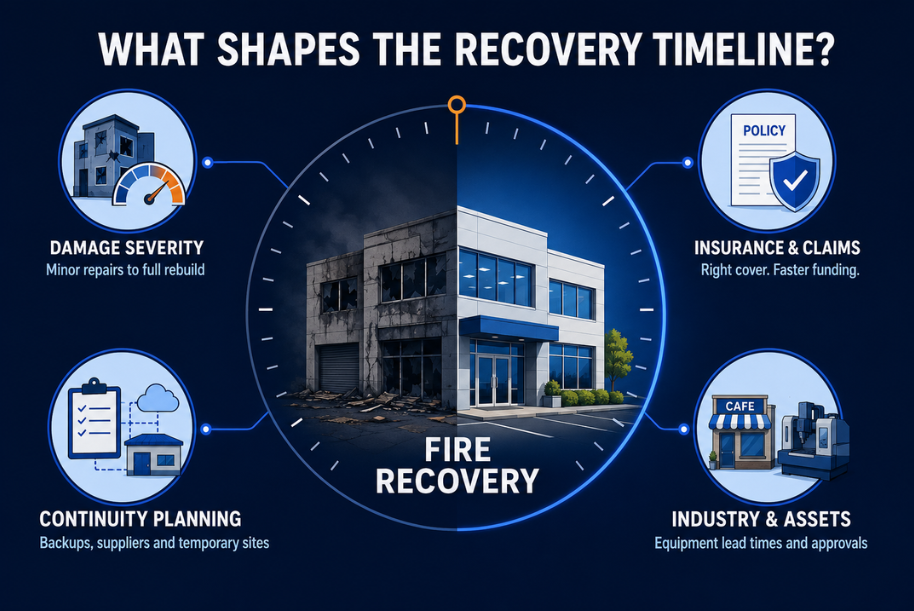
Severity and Scale of the Damage
Minor fires affecting a small area — smoke damage or superficial charring — often need only cleaning, repainting, and minor repairs, resolved within a few weeks.
A structural fire that compromises the building or destroys stock is a different story, requiring engineering assessments, council approvals, and full reconstruction before trading resumes.
Recovery time also depends heavily on whether the business had appropriate commercial fire insurance cover before the incident.
Business Interruption Insurance Australia and Claims Speed
This is often the single biggest factor. Businesses with comprehensive commercial property insurance in Australia and business interruption cover recover significantly faster, because funds for temporary premises, replacement stock, and wages are available early.
Businesses carrying underinsured small business Australia–style gaps, or without the right policy structure, frequently stall for months waiting on funding.
However, choosing the right business interruption indemnity period is critical because rebuilding can take much longer than originally expected.
A well-prepared fire damage insurance claim — with clear documentation, an up-to-date asset register, and prompt lodgement — also moves through insurers far quicker than a disorganised one.
Business Continuity Plan Fire Preparedness
Businesses with a documented continuity plan typically resume some level of trading much sooner, even from a temporary site or at reduced capacity.
Plans covering backup data, supplier contacts, and staff communication remove a huge amount of guesswork in the first critical days.
A broader review of business continuity insurance for Australian SMEs can help align the continuity plan with the financial protection available under the policy.
Industry Type and Physical Assets
A café or retail store with a straightforward fit-out may be trading again within two to three months of moderate fire damage.
A manufacturer reliant on specialised machinery may also need properly structured machinery breakdown insurance to address equipment-related recovery costs and downtime.
Manufacturers should also understand the difference between machinery breakdown and property damage, as the cause of damage can determine which section of a policy responds.
How Long to Rebuild a Business After a Fire: A Realistic Timeline
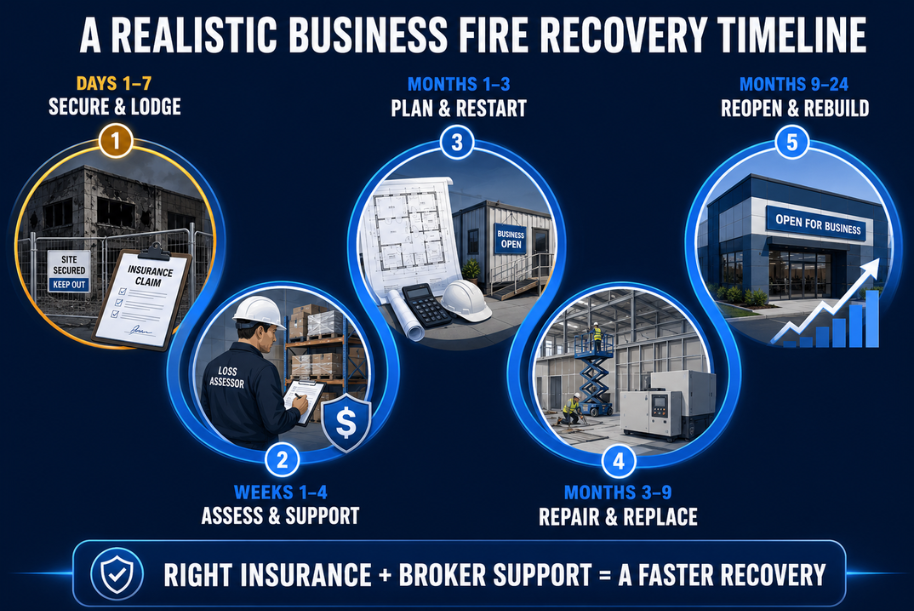
While every case differs, the average time to rebuild after a commercial fire in Australia broadly follows this pattern:
Days 1–7: Site is secured, emergency services clear the scene, and the fire damage claim is lodged. Loss assessors may attend within days.
Weeks 1–4: Damage assessment, salvage of stock and equipment, and initial insurer approvals occur. Business interruption payments, where covered, typically start flowing to support cash flow.
Months 1–3: Rebuild quotes are finalised, and contractors are engaged. Businesses with a continuity plan may resume trading from a temporary location.
Months 3–9: Structural repairs, fit-out, and equipment replacement take place, depending heavily on damage scale and trades availability.
Months 9–24: For significant losses, full reopening and a return to pre-fire revenue can take up to two years, particularly where customer relationships and market position must be rebuilt alongside the premises.
Significant losses demonstrate why choosing the right business interruption indemnity period is so important.
These are the practical steps to recover a business after a fire — and each stage moves faster with the right insurance and broker support behind it.
Fire Insurance Requirements Vary Across Australia
Business fire insurance obligations and building codes differ by state, which can affect rebuild timelines.
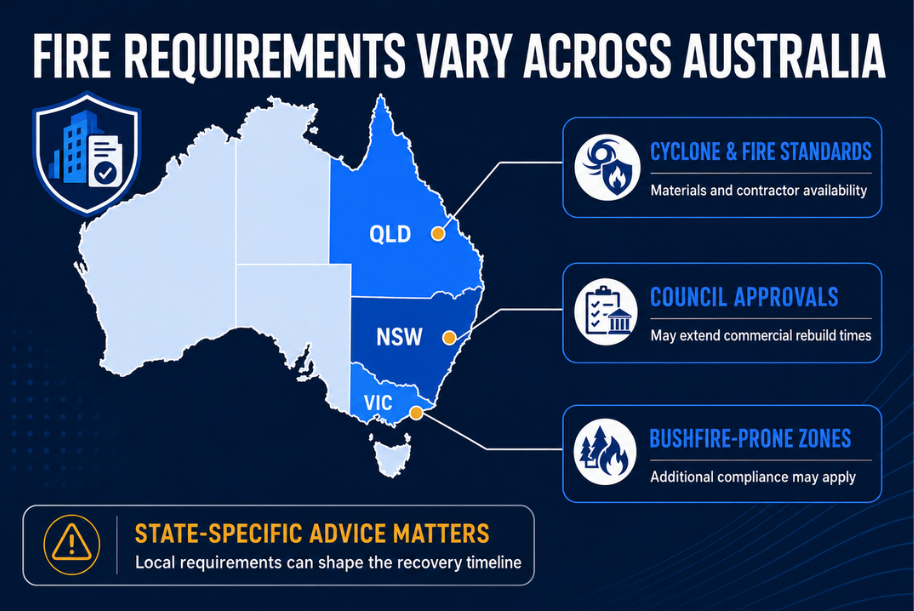
In NSW, council approval processes for commercial rebuilds can add several weeks; in VIC, bushfire-prone zoning may trigger additional compliance requirements; and in QLD, cyclone and fire-rating standards can influence material and contractor availability.
According to Australian small business fire statistics, a meaningful share of SMEs affected by fire never fully reopen — underscoring why SME fire recovery Australia–specific advice, tailored to your state, matters as much as the policy itself.
The Hidden Cost of a Slow Fire Damage Claims Process in Australia
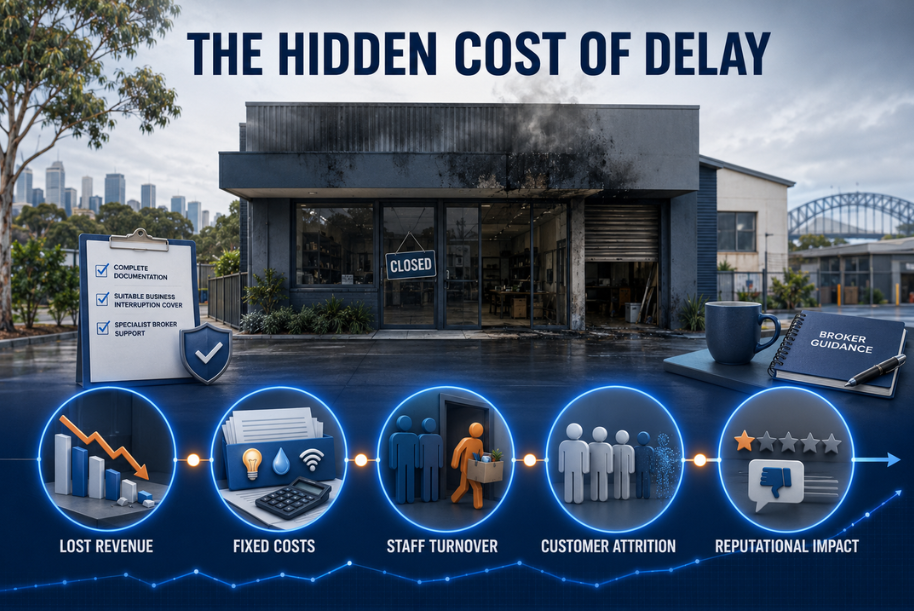
The financial damage from a fire rarely stops at the building and stock. Every week closed adds up:
- Lost revenue and market share to competitors
- Ongoing fixed costs (rent, loan repayments, premiums) without income
- Staff turnover as employees seek other work
- Customer attrition, particularly for service-based businesses
- Reputational impact from prolonged or poorly communicated closures
A slow fire damage claims process Australia businesses experience is rarely the insurer’s fault alone, it’s often a symptom of incomplete documentation or inadequate cover identified too late.
This is exactly why business interruption cover and broker guidance matter so much.
Incomplete documentation and undisclosed risk changes are among the common reasons building insurance claims fail or take longer to assess.
How an Insurance Broker in Australia Can Speed Up Recovery?
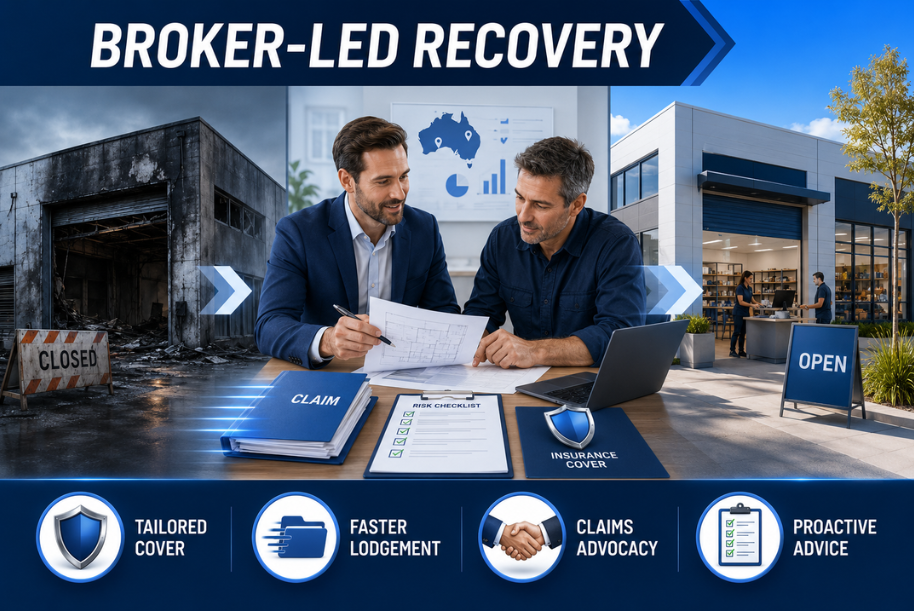
A business insurance broker trusted by Australian business owners does more than sell a policy — they actively help shorten the recovery timeline. As a small business insurance broker Australia businesses rely on,
Global Insurance Solutions typically delivers:
- Tailored coverage reflecting real rebuild costs, stock values, and interruption periods
- Faster claims lodgement, using pre-prepared documentation and direct insurer relationships
- Advocacy during disputes, ensuring payouts reflect the true cost of recovery
- Proactive risk advice, identifying gaps in cover before a fire occurs
Searching for a “commercial insurance broker near me“? Working with a broker before an incident consistently produces smoother, faster claims than dealing directly with an insurer for the first time mid-crisis.
A broker can structure tailored business insurance before a loss and provide hands-on insurance claims support after an incident.
Steps Businesses Can Take to Reduce Recovery Time
- Review your insurance annually — outdated sums insured are a leading cause of underinsurance.
- Add or review business interruption insurance Australia cover for lost income during rebuilding.
- Document your assets with photos, receipts, and a register stored offsite or in the cloud.
- Build a business continuity plan covering communication, temporary premises, and supplier contacts.
- Install fire prevention systems — sprinklers, alarms, and regular electrical checks.
- Work with an insurance broker who understands your industry and state-specific requirements.
- Review how your revenue, gross profit and ongoing expenses are treated so you can calculate your business interruption sum insured correctly.
Why Australian Businesses Choose Global Insurance Solutions

As a Global Insurance Solutions insurance broker, our team specialises in helping business owners prepare for the unexpected — and act fast when it happens.
From reviewing your current commercial property insurance cover to guiding a business interruption insurance claim from day one, we work to remove friction from recovery so you can focus on getting back to business.
Considered the best insurance broker for small businesses by many of our clients, we’re happy to provide a no-obligation commercial insurance quote businesses can compare with confidence.
If you’re unsure whether your current policy would genuinely cover a full recovery, now is the time to check — not after a fire has already started.
If you are unsure whether your current policy could fund a complete recovery, request a commercial insurance review before an incident exposes the gaps.
Frequently Asked Questions
Q1. How long does it take a small business to recover after a fire?
Ans 1. Minor fires with limited damage may allow reopening within weeks. Moderate to severe fires involving structural damage typically take three to nine months, while total losses can take up to two years for a full return to pre-fire trading.
Q2. Does insurance cover lost income after a fire?
Ans 2. Yes, provided the business holds business interruption insurance. This cover replaces lost income and pays ongoing fixed costs while the business can’t trade normally, significantly shortening the practical recovery period.
Q3. How much does business interruption insurance cost in Australia?
Ans 3. Premiums vary based on your industry, turnover, indemnity period, and risk profile. An insurance broker can benchmark quotes across insurers to ensure you’re not over- or under-paying for the level of cover your business actually needs.
Q4. What does business interruption insurance cover?
Ans 4. It typically covers lost gross profit, ongoing fixed costs such as rent and wages, and sometimes additional costs of working from a temporary location, for a defined indemnity period after an insured event like fire.
Q5. What happens if my business is underinsured?
Ans 5. Underinsurance means your payout won’t fully cover rebuild or stock replacement costs, leaving a funding gap that can stall recovery for months or force the business to close permanently. Regular policy reviews prevent this.
Q6. Can a business reopen before repairs are finished?
Ans 6. Often, yes. Businesses with a continuity plan frequently relocate to temporary premises or resume partial trading while repairs continue, helping retain customers and staff during the rebuild.
Q7. How do I lodge a fire damage insurance claim?
Ans 7. Secure the site, document the damage with photos and lodge your insurance claim through your broker as soon as possible. Early lodgement with clear documentation is the single biggest factor in speeding up claim assessment.
Q8. Why do businesses fail to reopen after a fire?
Ans 8. The most common reasons are underinsurance, lack of business interruption cover, and no continuity plan to manage cash flow during recovery. Working with an insurance broker significantly reduces this risk.
Important notice
This article is of a general nature only and does not take into account your specific objectives, financial situation or needs. It is also not financial advice, nor complete, so please discuss the full details with your insurance broker as to whether these types of insurance are appropriate for you. Deductibles, exclusions and limits apply. You should consider any relevant Target Market Determination and Product Disclosure Statement in deciding whether to buy or renew these types of insurance. Various insurers issue these types of insurance and cover can differ between insurers.
This article provides information rather than financial product or other advice. The content of this article, including any information contained in it, has been prepared without taking into account your objectives, financial situation or needs. You should consider the appropriateness of the information, taking these matters into account, before you act on any information. In particular, you should review the product disclosure statement for any product that the information relates to it before acquiring the product.
Information is current as at the date the article is written as specified within it but is subject to change. Global Insurance Solutions Pty Ltd make no representation as to the accuracy or completeness of the information. Various third parties have contributed to the production of this content. All information is subject to copyright and may not be reproduced without the prior written consent of Global Insurance Solutions Pty Ltd.

Risk Advisor, Insurance Broker & Director
With around 15 years in insurance, Yuvi Singh is a passionate Risk Advisor, Director, and Insurance Broker at Global Insurance Solutions. Backed by a Commerce degree and ANZIIF diploma, Yuvi leads a team servicing SMEs across industries like manufacturing, logistics, fuel, IT, and more. At GIS, clients benefit from tailored, transparent advice, access to 150+ insurers, and end-to-end risk solutions. Recognised as a 2022 Insurance Magazine Rising Star and 2024 Top Insurance Broker by Insurance Business Australia, Yuvi delivers flexible, effective outcomes with integrity and innovation.