
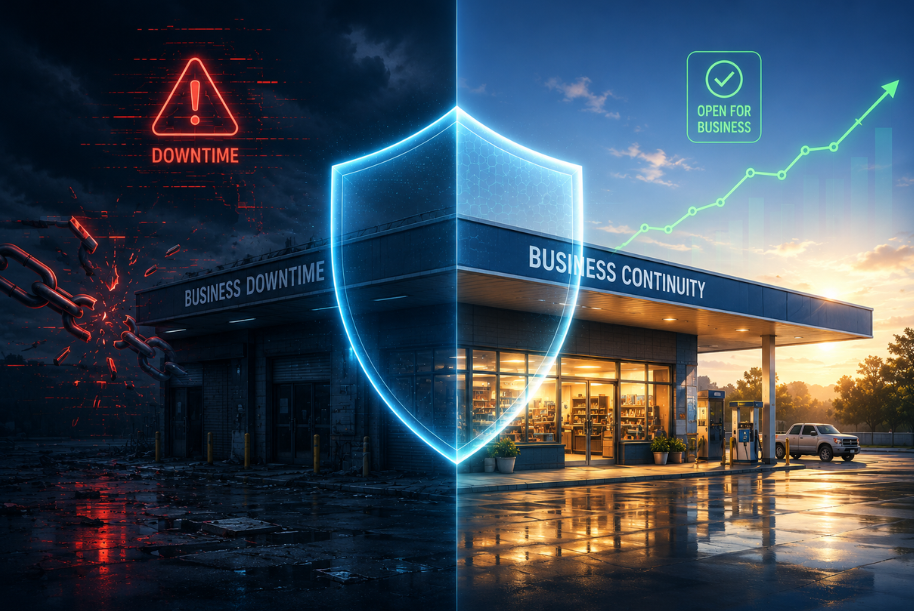
Business continuity insurance is becoming increasingly important for Australian businesses facing operational disruption, cyber attacks, natural disasters, supply chain failures, and unexpected shutdowns. Whether you operate a service station, manufacturing facility, hospitality venue, logistics company, or technology business, having the right business continuity cover and business interruption insurance can mean the difference between recovery and long-term financial damage.
At Global Insurance Solutions, an Insurance Broker Agency in Australia, we work with businesses across Australia that underestimate the real impact of downtime. Many businesses focus only on physical damage, but the bigger risk is often the loss of income, customer disruption, supply chain delays, and ongoing operating costs during a crisis. That is where business continuity insurance Australia solutions become critical.
According to the Australian Bureau of Statistics, over 43% of small businesses experience a major disruption every year, with many reporting cash flow pressure as the biggest challenge after an incident.
Source: https://www.abs.gov.au/
The IBM Cost of a Data Breach Report 2023 also found that the global average cost of a data breach reached USD $4.45 million, highlighting how cyber-related operational downtime is becoming one of the biggest threats to businesses globally.
What Is Business Continuity Insurance?
Business continuity insurance helps businesses recover financially and operationally after unexpected disruptions. It forms part of a broader business continuity strategy designed to reduce financial losses and help operations resume faster after an insured event.
A business continuity insurance policy may support businesses facing:
- Fire and property damage
- Floods and storms
- Equipment breakdowns
- Cyber attacks and ransomware
- Supply chain disruptions
- Power outages
- Operational shutdowns
- Temporary relocation costs
- Loss of income during downtime
Unlike standard property insurance, continuity insurance for businesses focuses heavily on maintaining cash flow, supporting recovery, and reducing operational disruption.
For many Australian businesses, protecting revenue after a disruption is just as important as repairing physical assets.

Why Business Continuity Matters for Australian Businesses?
Australian businesses are operating in a far more volatile risk environment than they were a decade ago. Severe weather events, cyber incidents, labour shortages, supply chain disruptions, and inflationary pressures are all affecting business resilience.
According to the Insurance Council of Australia, insured losses from extreme weather events exceeded $4.4 billion in 2023 alone.
Source: https://insurancecouncil.com.au Commercial Insurance Broker
For businesses without adequate business continuity planning insurance, even a short interruption can create serious financial consequences.
Common consequences of operational disruption include:
- Loss of revenue
- Ongoing payroll expenses
- Customer cancellations
- Contractual penalties
- Supply chain delays
- Reputational damage
- Reduced productivity
- Increased recovery costs
Many businesses assume they can recover quickly after a disruption, but recovery timelines are often longer than expected. A fire may physically damage a building in hours, but restoring operations, rebuilding customer confidence, and stabilising cash flow can take months.
This is why business continuity risk management has become a major focus for Australian SMEs and commercial businesses.
What Does Business Continuity Insurance Cover?
Business continuity insurance coverage can vary significantly depending on the insurer, industry, and policy wording.

However, a well-structured business continuity insurance plan may include:
Loss of Income
This helps cover lost revenue while your business operations are interrupted following an insured event.
Ongoing Operating Expenses
Many businesses still need to pay wages, rent, loan repayments, utilities, and supplier costs during downtime.
Temporary Relocation Costs
Some policies may assist with moving operations to a temporary location to reduce disruption.
Supply Chain Disruption Impacts
Supply chain insurance for manufacturers and operational businesses can help where disruptions impact revenue generation.
Cyber-Related Downtime
Some policies may include limited cyber attack business interruption insurance protection. However, dedicated cyber insurance Australia solutions are often required for broader cyber exposures.
Recovery and Extra Expenses
Coverage may assist with costs associated with reducing downtime and accelerating recovery.
The scope of business continuity coverage depends heavily on policy definitions, triggers, exclusions, indemnity periods, and endorsements.
That is why working with specialist business insurance brokers is important.
Common Risks That Can Disrupt Operations
Operational disruption can occur in almost any industry.
At Global Insurance Solutions, we regularly see businesses impacted by risks such as:
Natural Disasters
Floods, bushfires, storms, and hail events continue to affect businesses across Australia. Natural disaster business continuity planning has become essential for many industries.
Cyber Attacks
Ransomware business interruption cover is becoming increasingly relevant as businesses rely more heavily on digital systems and cloud infrastructure.
According to the Australian Cyber Security Centre, cybercrime reports in Australia increased by 23% in a single year.
Source: https://www.cyber.gov.au/
Supply Chain Failures
Global shipping delays and supplier shortages continue to affect Australian manufacturing, hospitality, retail, and fuel industries.
Equipment Breakdown
Factory downtime insurance and operational risk insurance are increasingly important for businesses relying on specialised machinery.
We have simplified the difference between Machinery Breakdown & Property Damage; you can read it here.
Utility Failures
Power outages and telecommunications failures can significantly impact operations, especially for service stations, healthcare businesses, and IT companies.
Business Interruption vs Business Continuity Insurance

One of the most common questions businesses ask is:
What is the difference between business interruption insurance and business continuity insurance?
While the terms are related, they are not identical.
Business Interruption Insurance
Business interruption insurance generally covers financial losses resulting from insured physical damage events, such as fire or storm damage.
You can read this blog to better understand business interruption insurance for businesses.
Coverage may include:
- Loss of gross profit
- Fixed operating costs
- Increased cost of working
Business Continuity Insurance
Business continuity insurance is broader, focusing on maintaining operations, recovery planning, operational resilience, and financial continuity after a disruption.
Business continuity planning insurance may involve:
- Recovery planning
- Operational continuity strategies
- Cyber resilience
- Supply chain risk management
- Downtime mitigation
Understanding business interruption vs business continuity insurance is important because many businesses incorrectly assume they are fully protected when they may still have major gaps.
Industries That Need Business Continuity Cover Most
Some industries face significantly higher exposure to operational disruption.
Service Stations and Fuel Businesses
Petrol station business continuity insurance is critical due to fuel supply dependencies, environmental risks, POS system outages, and refrigeration exposures.
Fuel station downtime insurance can help businesses manage interruptions that impact trading ability and cash flow.
Manufacturing Businesses
Manufacturing business interruption insurance and supply chain insurance for manufacturers are increasingly important due to machinery dependency and global supplier risks.
Even short disruptions can halt production and impact customer contracts.
Hospitality Businesses
Restaurant business interruption insurance and café business continuity cover help hospitality businesses manage closures, equipment breakdowns, and revenue loss.
IT and Technology Businesses
Cyber business continuity insurance and IT downtime insurance Australia solutions are essential for businesses heavily reliant on digital infrastructure.
Cloud outages, ransomware attacks, and software failures can severely impact revenue generation.
We have curated a blog on First-party vs Third-party Cyber Insurance, read it here.
Common Gaps and Exclusions Businesses Overlook
Many businesses assume they are protected until a claim occurs.
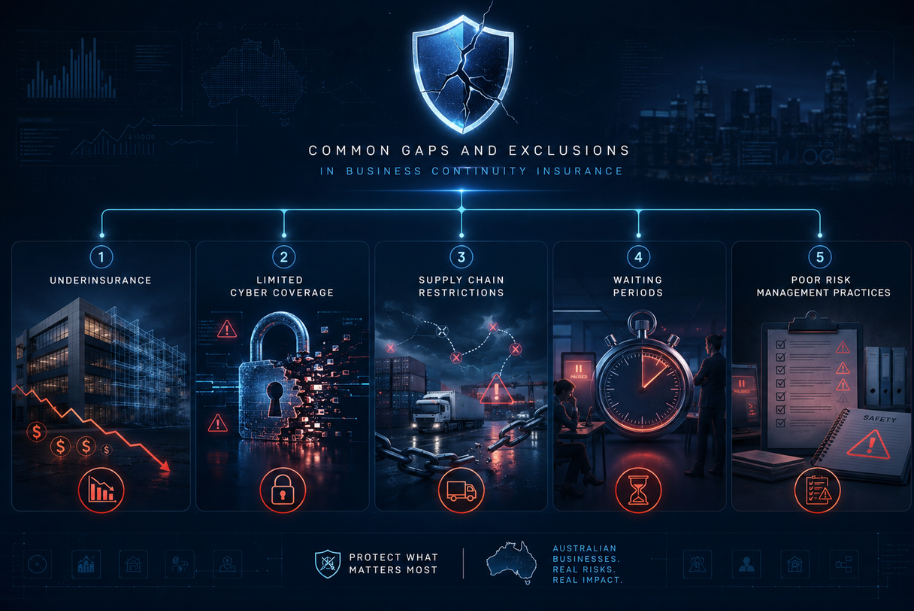
Some of the most common exclusions in business continuity insurance include:
Underinsurance
Businesses often underestimate turnover, rebuilding costs, or indemnity periods.
Limited Cyber Coverage
Some traditional policies exclude cyber-related operational disruption unless specifically endorsed.
Supply Chain Restrictions
Not all policies respond to contingent business interruption or supplier failures.
Waiting Periods
Certain policies include waiting periods before benefits apply.
Poor Risk Management Practices
Insurers may reduce or deny claims where businesses fail to maintain reasonable risk controls.
Understanding these exclusions is critical when structuring continuity insurance for businesses.
How Global Insurance Solutions Helps Businesses Prepare?
At Global Insurance Solutions, we help businesses across Australia understand how business continuity insurance works in Australia and where common coverage gaps exist.
As an Australian business insurance broker, we focus on:
- Identifying operational risks
- Structuring tailored business continuity cover
- Explaining policy triggers and exclusions
- Supporting claims preparation
- Reviewing indemnity periods
- Aligning cover with cash flow exposure
- Assisting with broader risk management for Australian businesses
We work with industries including:
- Service stations
- Manufacturing
- Hospitality
- Construction
- Healthcare
- Logistics
- Technology businesses
- SMEs and growing enterprises
Our goal is not simply to arrange insurance. It is to help businesses build operational resilience before disruption occurs.
How Businesses Can Improve Their Continuity Strategy?
Insurance is only one part of a broader business continuity strategy.
Businesses should also consider:
- Disaster recovery planning
- Data backup systems
- Cyber security controls
- Supplier diversification
- Emergency response procedures
- Cash flow forecasting
- Staff continuity planning
- Scenario testing and recovery drills
The stronger the operational planning, the better positioned a business may be during a disruption.
Final Thoughts
Business disruption is no longer a rare event. From cyber incidents and supply chain delays to floods, storms, and operational shutdowns, Australian businesses face increasing pressure to remain resilient.
The right business continuity insurance Australia solution can help protect revenue, maintain operations, and reduce long-term financial damage when unexpected events occur.
However, policy wording, coverage triggers, indemnity periods, and exclusions matter significantly. Businesses that rely on generic policies often discover critical gaps only after a claim arises.
At Global Insurance Solutions, we help businesses across Australia structure practical business continuity cover aligned to their operational risks, industry exposures, and recovery requirements.
If you want to better understand your exposure to operational disruption, speak with a specialist business insurance broker today.
FAQs
Q1. What is business continuity insurance?
Ans 1. Business continuity insurance helps businesses recover financially after unexpected disruptions such as cyber attacks, natural disasters, equipment failures, or operational shutdowns.
Q2. Is business continuity insurance the same as business interruption insurance?
Ans 2. Not exactly. Business interruption insurance usually focuses on income loss following insured damage, while business continuity insurance takes a broader approach to operational recovery and resilience.
Q3. What does business continuity insurance cover?
Ans 3. Coverage may include loss of income, operating expenses, temporary relocation costs, supply chain disruption impacts, and recovery support, depending on the policy wording.
Q4. Why do Australian businesses need business continuity insurance?
Ans 4. Australian businesses face growing risks from cyber incidents, floods, storms, bushfires, and operational disruption that can significantly impact cash flow and business survival.
Q5. Does business continuity insurance cover cyber attacks?
Ans 5. Some policies may provide limited cyber-related interruption coverage. However, many businesses require dedicated cyber insurance for broader protection against ransomware and IT downtime.
Q6. Which industries benefit most from business continuity insurance?
Ans 6. Industries such as manufacturing, hospitality, service stations, logistics, healthcare, and technology businesses often benefit significantly from business continuity cover.
Q7. Can small businesses get business continuity insurance?
Ans 7. Yes. Business continuity insurance for small businesses in Australia can be tailored based on operational risks, industry type, and revenue exposure.
Q8. What are common exclusions in business continuity insurance?
Ans 8. Common exclusions may include uninsured events, wear and tear, gradual deterioration, poor risk management practices, and certain cyber incidents unless specifically endorsed.
Q9. How can an insurance broker help with business continuity planning?
Ans 9. A specialist insurance broker can identify operational risks, explain policy wording, structure suitable cover, and help businesses prepare for operational disruption.
Important notice
This article is of a general nature only and does not take into account your specific objectives, financial situation or needs. It is also not financial advice, nor complete, so please discuss the full details with your insurance broker as to whether these types of insurance are appropriate for you. Deductibles, exclusions and limits apply. You should consider any relevant Target Market Determination and Product Disclosure Statement in deciding whether to buy or renew these types of insurance. Various insurers issue these types of insurance and cover can differ between insurers.
This article provides information rather than financial product or other advice. The content of this article, including any information contained in it, has been prepared without taking into account your objectives, financial situation or needs. You should consider the appropriateness of the information, taking these matters into account, before you act on any information. In particular, you should review the product disclosure statement for any product that the information relates to it before acquiring the product.
Information is current as at the date the article is written as specified within it but is subject to change. Global Insurance Solutions Pty Ltd make no representation as to the accuracy or completeness of the information. Various third parties have contributed to the production of this content. All information is subject to copyright and may not be reproduced without the prior written consent of Global Insurance Solutions Pty Ltd.

Risk Advisor, Insurance Broker & Director
With around 15 years in insurance, Yuvi Singh is a passionate Risk Advisor, Director, and Insurance Broker at Global Insurance Solutions. Backed by a Commerce degree and ANZIIF diploma, Yuvi leads a team servicing SMEs across industries like manufacturing, logistics, fuel, IT, and more. At GIS, clients benefit from tailored, transparent advice, access to 150+ insurers, and end-to-end risk solutions. Recognised as a 2022 Insurance Magazine Rising Star and 2024 Top Insurance Broker by Insurance Business Australia, Yuvi delivers flexible, effective outcomes with integrity and innovation.