

Businesses that rely on local, interstate, or international freight movements often assume that if goods are damaged, lost, or stolen during transit, their marine transit insurance will automatically respond. Unfortunately, this is not always the case.
At Global Insurance Solutions, we regularly speak with businesses that are surprised to discover their marine insurance claim has been denied or that their marine transit policy does not respond in the way they expected. Whether you are an importer, exporter, manufacturer, wholesaler, distributor, retailer, or logistics operator, understanding the fine print within your marine transit insurance policy is critical.
Marine transit insurance, marine cargo insurance, freight insurance, and goods in transit insurance are designed to protect businesses against a range of transportation risks. However, policy exclusions, conditions, underinsurance, and documentation requirements can all impact claim outcomes.
In this guide, we’ll explain why marine transit claims are rejected, common marine insurance exclusions, and what Australian businesses should know before a cargo loss occurs.
Marine Transit Insurance Claims: Why Understanding the Fine Print Matters
A rejected insurance claim can create significant financial pressure for businesses already dealing with supply chain disruptions, delayed deliveries, damaged cargo, or customer complaints.
Many businesses purchase marine transit insurance policies in Australia, believing all cargo movement is covered. However, every marine cargo insurance policy contains specific terms, conditions, and exclusions that determine whether a claim will be accepted.
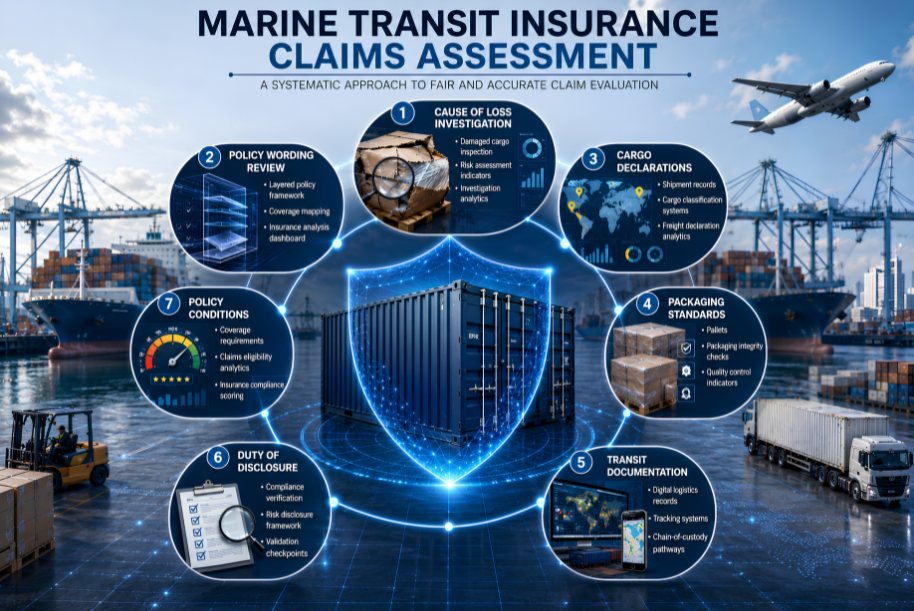
When cargo is damaged during transit resulting in a loss, insurers will carefully assess:
- The cause of loss
- The policy wording
- Cargo declarations
- Packaging standards
- Transit documentation
- Duty of disclosure obligations
- Compliance with policy conditions
Understanding marine transit insurance fine print before a loss occurs may help reduce the likelihood of an insurance claim dispute.
Why Your Marine Transit Policy May Not Respond After Cargo Damage?
One of the most common questions businesses ask is: “Why was my insurance claim rejected?”
While every claim is assessed individually, there are several common reasons cargo insurance claims fail.
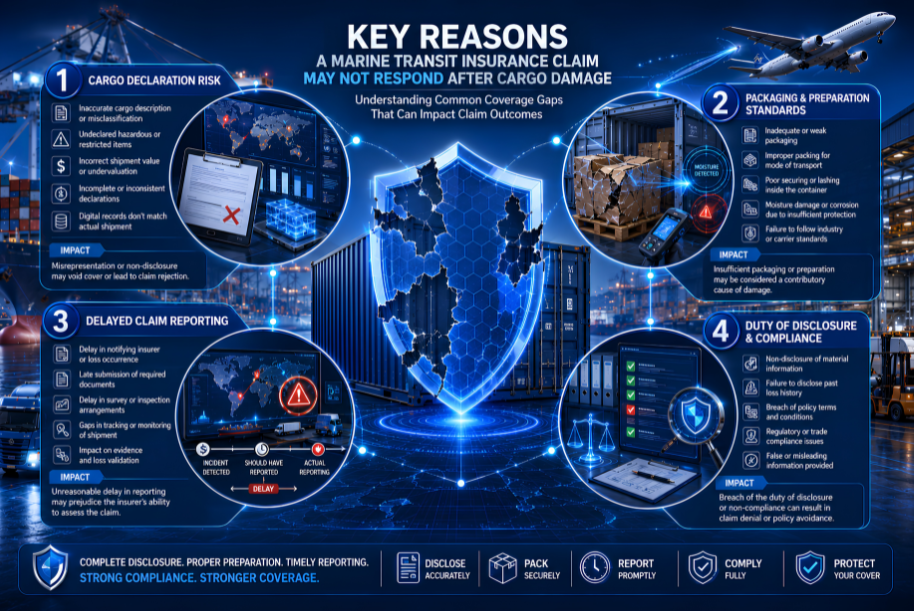
Incorrect Cargo Declarations
The information provided when arranging marine cargo insurance coverage is critical.
If goods are incorrectly described, undervalued, or classified under the wrong commodity category, insurers may question whether the cargo falls within the intended scope of cover.
This issue commonly affects:
- Importers insurance arrangements
- Exporters insurance programs
- International cargo insurance policies
- Commercial marine insurance placements
Failure to accurately disclose cargo values, packaging methods, or shipment frequency may result in a marine insurance claim being rejected.
Packaging Requirements Under Marine Insurance
Many marine transit insurance policies require insured goods to be adequately packed and prepared for transit.
If freight damage in transit occurs because packaging was inadequate, insurers may determine that the loss resulted from poor preparation rather than an insured event.
Examples include:
- Insufficient palletisation
- Inadequate container securing
- Poor wrapping or cushioning
- Failure to protect goods from moisture
Delayed Claim Notifications
Marine insurance conditions often require prompt notification following an incident.
Delays in reporting:
- Damaged cargo
- Stolen goods
- Shipment loss
- Theft during transit
May impact claim assessment and potentially prejudice claim settlement.
Duty of Disclosure in Marine Transit Insurance
Businesses have a legal obligation to disclose information that may affect an insurer’s decision to provide cover.
Failure to comply with duty of disclosure requirements may result in:
- Insurance claim refusal
- Reduced claim payments
- Policy cancellation
- Denied insurance claim Australia outcomes
Key Marine Transit Insurance Exclusions That Could Affect Your Claim
Common Marine Insurance Exclusions
Every marine cargo policy contains exclusions that limit or remove cover in specific circumstances.
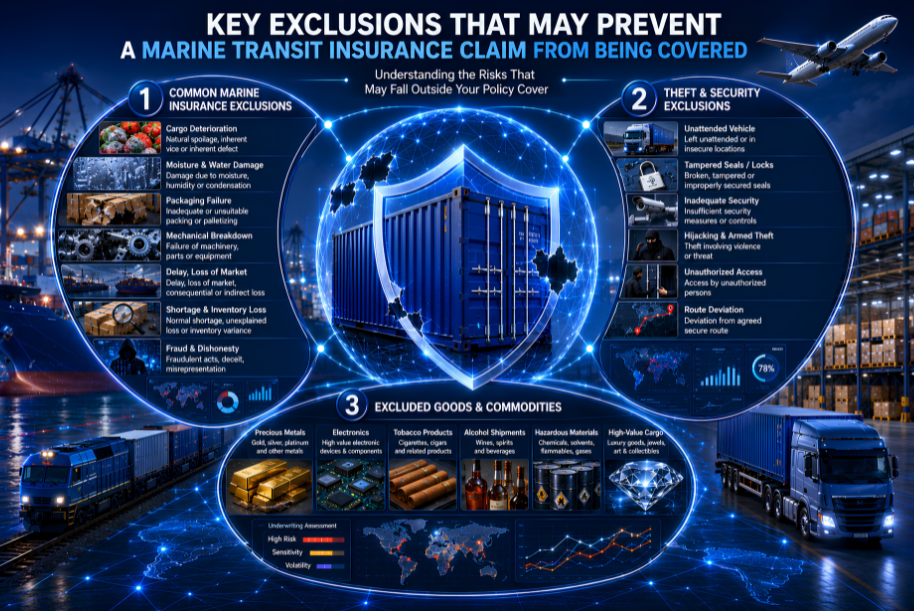
Some common marine insurance exclusions include:
- Wear and tear
- Gradual deterioration
- Inherent vice
- Chips, dents and/or scratches
- Poor packaging
- Delay-related losses
- Mechanical breakdown
- Unexplained shortages
- Fraudulent acts
- Illegal shipments
Understanding marine transit insurance exclusions is essential when assessing your overall risk exposure.
Theft and Damage Exclusions
A common misconception is that every theft during transit insurance claim will automatically be covered.
However, insurers may decline claims where:
- Vehicles were left unsecured
- Security protocols were ignored
- Goods were left unattended
- Theft occurred outside approved transit periods
Similarly, businesses often ask: does marine transit insurance cover theft?
The answer depends on the specific policy wording and circumstances surrounding the loss.
Excluded Goods And Commodities
Certain products may require specialised cargo prMarine Transit Insurance Claims: Why Understanding the Fine Print Matters otection insurance or additional underwriting approval.
Examples may include:
- Precious metals
- Cash
- Tobacco
- Alcohol
- Dangerous goods
- High-value electronics
Marine cargo insurance exclusions often vary depending on cargo type and insurer appetite.
Who Is Responsible When Marine Transit Insurance Doesn't Cover a Cargo Loss?
When a cargo insurance claim is declined, businesses often ask who bears responsibility for the loss.
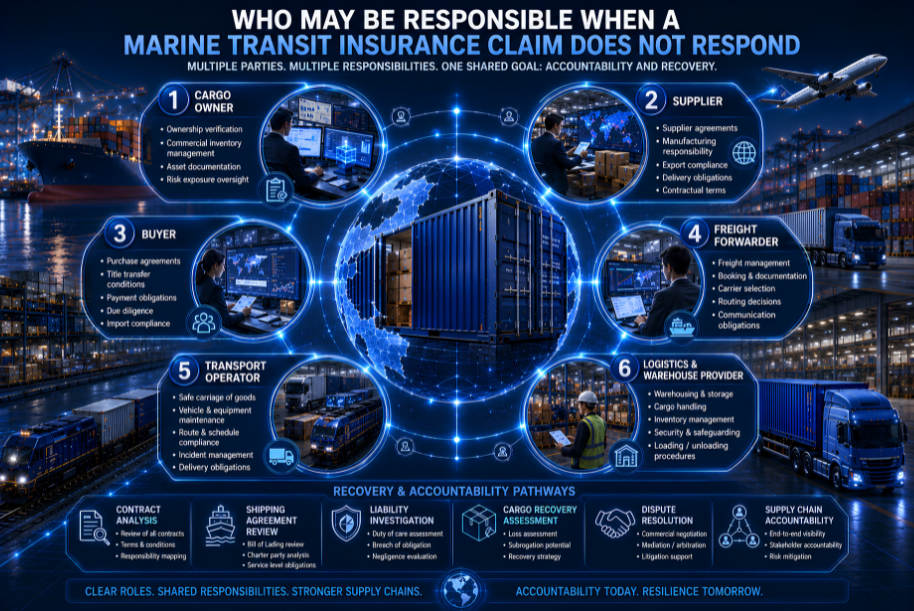
The answer may depend on contractual arrangements between:
- Cargo owners
- Suppliers
- Buyers
- Freight forwarders
- Transport operators
- Logistics providers
Freight Forwarding and Contractual Liability
A freight forwarder insurance program may protect liabilities arising from transportation services. However, contractual obligations vary significantly.
Responsibility for cargo loss may depend on:
- Incoterms
- Shipping agreements
- Carrier contracts
- Storage arrangements
Recovering Losses From Third Parties
If a marine insurance claim does not respond, businesses may still have recovery rights against:
- Carriers
- Warehouses
- Transport operators
- Stevedores
- Logistics providers
Professional advice should be sought before pursuing recovery action.
Understanding Where Marine Transit Cover Begins and Ends
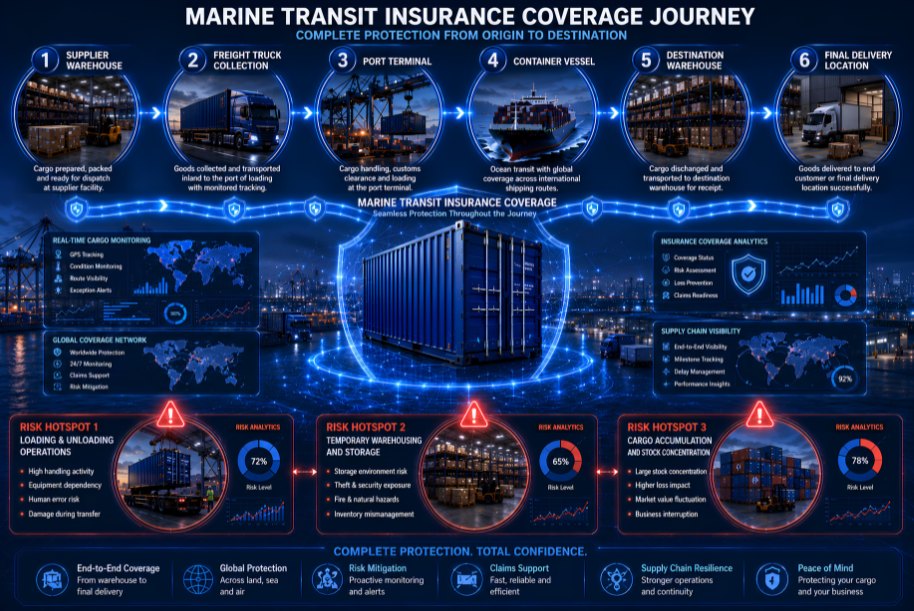
What Marine Transit Insurance Covers
Many businesses assume marine transit cover only applies while goods are physically on a vessel.
In reality, many marine transit insurance coverage arrangements operate on a warehouse-to-warehouse cover basis.
This means cover may extend from:
- Supplier premises
- Collection points
- Inland transit
- Port handling
- International shipping
- Final delivery destination
However, the exact start and end points depend on the marine transit policy wording.
Loading and Unloading Risks
Loading and unloading activities can present significant transportation risks.
Businesses should review whether their cargo insurance coverage extends to:
- Container loading
- Forklift operations
- Warehousing transfers
- Temporary storage
- Cross-docking facilities
Coverage gaps during these stages can result in unexpected cargo loss exposures.
Cargo Storage and Accumulation Risks
Temporary storage often falls outside standard transit assumptions.
Accumulation of high-value stock in warehouses or depots may exceed policy limits and affect claim outcomes if not properly disclosed.
Read the blog on protecting goods against supply chain risks, read here
Marine Transit Insurance Exclusions Explained for Australian Businesses
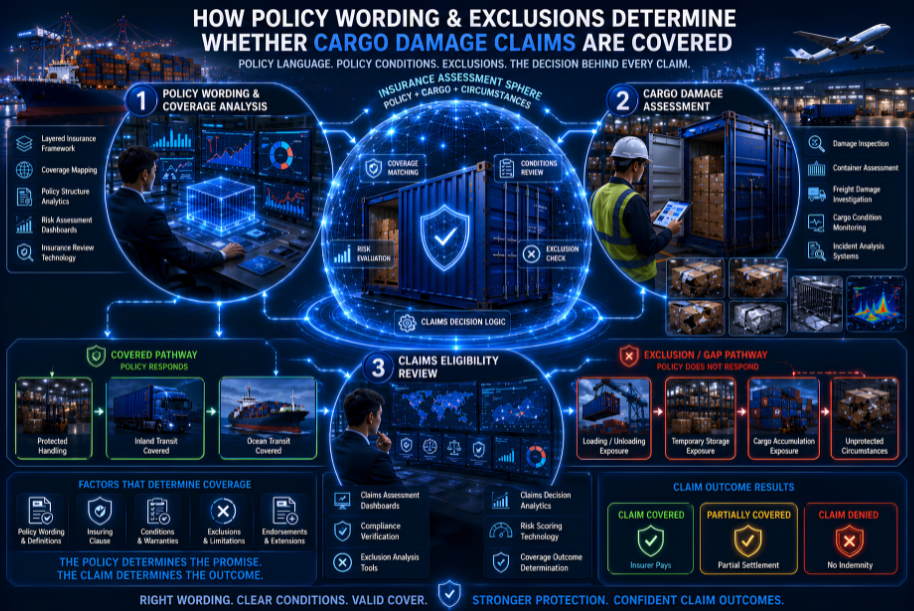
Marine Transit Insurance Policy Wording Matters
Insurance policy wording is arguably the most important part of any marine transit insurance Australia policy.
Two policies may appear similar yet provide vastly different levels of protection.
Businesses should review:
- Marine cargo policy wording
- Transit insurance exclusions
- Insured transit risks
- Policy limits
- Excesses
- Claims procedures
Does Marine Transit Insurance Cover Damage?
Another frequently asked question is: does marine transit insurance cover damage?
In many cases, accidental damage may be covered where:
- Damage occurs during transit
- The event is sudden and unforeseen
- No exclusions apply
- Policy conditions have been satisfied
However, damage resulting from poor packaging, improper handling, wear and tear, or inherent defects may not be covered.
Shipping Damage Claims and Cargo Loss Claims
Examples of claims that may be covered include:
- Goods damaged during shipping
- Freight damaged in transit
- Cargo loss claim events
- Shipment loss insurance incidents
- Damaged goods insurance claim situations
- Shipping damage claim events
Coverage always depends on the specific marine cargo insurance policy and claim circumstances.
How Underinsurance and Policy Conditions Can Impact Marine Transit Claims
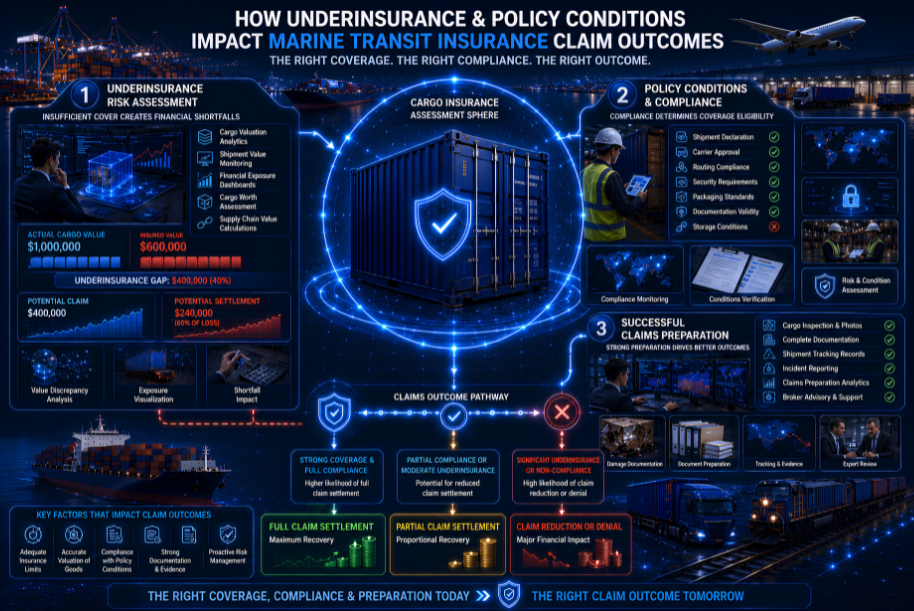
Underinsurance In Marine Transit Policies
Underinsurance remains one of the most overlooked issues affecting marine insurance claim outcomes.
Many businesses insure cargo values based on:
- Cost price only
- Outdated valuations
- Incomplete shipment values
This can create significant shortfalls during claim settlement.
Marine Cargo Insurance Policy Conditions
Policy conditions may require businesses to:
- Maintain accurate records
- Declare shipments correctly
- Use approved carriers
- Follow security requirements
- Notify losses promptly
Failure to comply may impact a transit insurance claim even where a loss would otherwise be covered.
Claims Preparation Best Practices
To improve the likelihood of a successful cargo insurance claim, businesses should:
- Review marine insurance conditions annually
- Understand policy exclusions
- Maintain shipment records
- Photograph damaged cargo immediately
- Notify insurers promptly
- Retain freight documentation
- Work with an experienced insurance broker
How To Avoid A Rejected Marine Transit Claim?
While no policy can guarantee every claim will be paid, businesses can reduce the likelihood of an insurance claim being denied by:
- Reviewing marine transit insurance coverage regularly
- Understanding marine transit insurance exclusions
- Checking cargo values and declarations
- Following packaging requirements
- Meeting duty of disclosure obligations
- Maintaining strong documentation processes
- Reviewing supply chain insurance exposures annually
Businesses involved in international cargo insurance, freight insurance Australia, shipping goods insurance, transport insurance Australia, and logistics insurance Australia should ensure their policies evolve alongside operational changes and growing supply chain risk exposures.
Final Thoughts
Marine transit insurance plays a critical role in protecting businesses against cargo loss, shipment protection risks, damaged cargo incidents, and other transportation-related exposures. However, a marine insurance claim rejection outcome can occur when businesses overlook policy wording, exclusions, documentation requirements, or underinsurance issues.
At Global Insurance Solutions, we help Australian businesses understand what marine transit insurance covers, identify potential coverage gaps, review marine transit policy wording, and structure tailored marine cargo insurance solutions that align with their operational risks.
Before your next shipment leaves the warehouse, it may be worth reviewing your marine cargo policy to ensure the fine print doesn’t become an expensive surprise when a claim arises.
Read the blogs we have prepared –
Federal Budget risk management strategies for businesses
Frequently Asked Questions About Marine Transit Insurance Claims
Q1.Why are marine transit insurance claims rejected?
Ans 1. Marine transit insurance claims may be rejected due to policy exclusions, inadequate packaging, incorrect cargo declarations, underinsurance, delayed claim notifications, or failure to comply with policy conditions.
Q2. What does marine transit insurance cover?
Ans 2. Marine transit insurance typically covers physical loss or accidental damage to insured goods during transit, subject to the policy wording, limits, conditions, and exclusions.
Q3. Does marine transit insurance cover theft?
Ans 3. Marine transit insurance may cover theft during transit; however, cover depends on the circumstances of the loss, security requirements, and specific policy exclusions.
Q4. What are the most common marine transit insurance exclusions?
Ans 4. Common marine transit insurance exclusions include wear and tear, gradual deterioration, poor packaging, delay-related losses, inherent vice, mechanical breakdown, and certain high-risk goods.
Q5. Does marine transit insurance cover goods damaged during shipping?
Ans 5. Many marine cargo insurance policies cover goods damaged during shipping if the damage results from an insured event and no policy exclusions apply.
Q6. What is warehouse to warehouse cover?
Ans 6. Warehouse to warehouse cover generally protects the time goods leave the supplier’s premises until they arrive at the final destination, subject to policy terms and conditions.
Q7. Can underinsurance affect a marine cargo insurance claim?
Ans 7. Yes. Underinsurance can significantly reduce claim payments if cargo values are declared below their true replacement or invoiced value.
Q8. Who is responsible if marine transit insurance doesn't cover a cargo loss?
Ans 8. Responsibility may depend on shipping contracts, Incoterms, freight agreements, and the obligations of carriers, freight forwarders, logistics providers, buyers, or sellers.
Q9. What should I do if my cargo is damaged during transit?
Ans 9. You should notify your insurer immediately, document the damage with photographs, retain shipping records, preserve evidence, and follow the claims process outlined in your policy.
Q10. What documents are required for a marine transit insurance claim?
Ans 10. Insurers commonly require invoices, packing lists, transport documents, delivery receipts, survey reports, photographs, and evidence of the loss or damage.
Q11. Does marine transit insurance cover international shipments?
Ans 11. Yes. Many international cargo insurance policies provide cover for overseas shipments, imports, exports, and global supply chain movements, subject to policy terms.
Q12. How can businesses reduce the risk of a rejected marine transit claim?
Ans 12. Businesses can reduce claim disputes by reviewing policy wording regularly, accurately declaring cargo values, complying with packaging requirements, maintaining documentation, and working with an experienced insurance broker.
Q13. Is marine transit insurance mandatory in Australia?
Ans 13. Marine transit insurance is generally not legally mandatory in Australia, but it is often recommended for businesses that transport, import, export, manufacture, distribute, or sell goods.
Q14. What's the difference between marine cargo insurance and goods in transit insurance?
Ans 14. Marine cargo insurance typically covers domestic and international shipments across various transport modes, while goods in transit insurance often focuses on domestic road transport exposures.
Q15. How often should businesses review their marine transit insurance policy?
Ans 15. Australian businesses should review their marine transit insurance coverage at least annually or whenever there are significant changes to cargo values, shipping routes, suppliers, products, or logistics arrangements.
Important notice
This article is of a general nature only and does not take into account your specific objectives, financial situation or needs. It is also not financial advice, nor complete, so please discuss the full details with your insurance broker as to whether these types of insurance are appropriate for you. Deductibles, exclusions and limits apply. You should consider any relevant Target Market Determination and Product Disclosure Statement in deciding whether to buy or renew these types of insurance. Various insurers issue these types of insurance and cover can differ between insurers.
This article provides information rather than financial product or other advice. The content of this article, including any information contained in it, has been prepared without taking into account your objectives, financial situation or needs. You should consider the appropriateness of the information, taking these matters into account, before you act on any information. In particular, you should review the product disclosure statement for any product that the information relates to it before acquiring the product.
Information is current as at the date the article is written as specified within it but is subject to change. Global Insurance Solutions Pty Ltd make no representation as to the accuracy or completeness of the information. Various third parties have contributed to the production of this content. All information is subject to copyright and may not be reproduced without the prior written consent of Global Insurance Solutions Pty Ltd.

Risk Advisor, Insurance Broker & Director
With around 15 years in insurance, Yuvi Singh is a passionate Risk Advisor, Director, and Insurance Broker at Global Insurance Solutions. Backed by a Commerce degree and ANZIIF diploma, Yuvi leads a team servicing SMEs across industries like manufacturing, logistics, fuel, IT, and more. At GIS, clients benefit from tailored, transparent advice, access to 150+ insurers, and end-to-end risk solutions. Recognised as a 2022 Insurance Magazine Rising Star and 2024 Top Insurance Broker by Insurance Business Australia, Yuvi delivers flexible, effective outcomes with integrity and innovation.