

Cyber insurance for healthcare, cyber insurance healthcare Australia and cyber liability insurance for healthcare are now among the fastest-growing insurance searches across Australia. From small clinics to large hospitals, healthcare businesses are increasingly targeted by cyber criminals due to the sensitive patient data they store.
Medical practices, allied health clinics and hospitals rely heavily on digital systems, cloud-based records and telehealth platforms. When these systems are compromised, the financial and reputational impact can be severe. This is where medical cyber insurance and healthcare cyber insurance Australia become essential risk management tools.

At Global Insurance Solutions, we work with Australia’s leading insurers to structure cyber insurance for medical practices, doctors, clinics and allied health businesses. The goal is not just to obtain a policy but to ensure coverage responds when a real cyber incident occurs.
According to the Australian Cyber Security Centre (ACSC), cybercrime reports in Australia increased by nearly 23% in recent years, with healthcare and professional services among the most targeted sectors.
Source: https://www.cyber.gov.au
Top Cyber Risks Facing Medical Practices
Healthcare cybersecurity risks in Australia continue to rise as patient data becomes increasingly digitised and reliance on cloud-based systems grows.
Common cyber exposures for healthcare businesses

- Patient data breaches and privacy violations
- Phishing attacks targeting staff
- Ransomware is locking medical records
- Business interruption due to system outages
- Telehealth platform vulnerabilities
- Third-party software breaches
Medical practices and allied health providers often assume their IT provider will handle cyber risks. However, cyber attacks can result in regulatory fines, legal costs and business interruption losses that standard policies do not cover.
This is why cyber insurance for clinics and cyber insurance for doctors in Australia is increasingly seen as essential protection.
Healthcare Data Breach Laws in Australia
Coverage Is More Than a Certificate
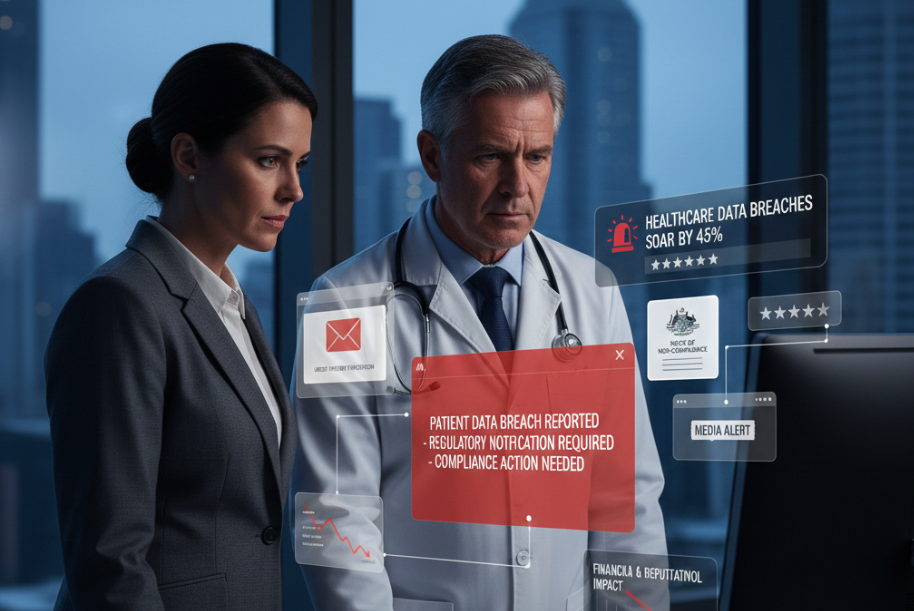
Healthcare providers must comply with strict privacy and data breach regulations.
Key regulations impacting healthcare businesses
- Privacy Act 1988
- Notifiable Data Breaches (NDB) scheme
- OAIC reporting requirements
- Patient confidentiality obligations
If patient data is compromised, healthcare businesses must notify affected individuals and regulators. Failure to comply can result in significant penalties and reputational damage.
The Office of the Australian Information Commissioner reports that healthcare is consistently among the top industries for data breach notifications.
Source: https://www.oaic.gov.au
Healthcare data breach insurance and cyber liability insurance for healthcare help cover notification costs, legal defence and regulatory investigations.
Why Healthcare Is Australia’s Most Targeted Industry
Healthcare organisations are prime targets because they store highly sensitive personal and financial data.

Why hackers target healthcare?
- High-value patient data
- Urgent need to restore systems
- Legacy IT infrastructure
- Limited cybersecurity resources
- Increased use of telehealth
IBM’s global Cost of a Data Breach Report shows healthcare has the highest average breach cost across all industries, reaching over USD $10 million globally.
Source: https://www.ibm.com/reports/data-breach
This makes cyber insurance for healthcare businesses a critical financial protection tool.
Ransomware Attacks on Clinics Are Rising
Ransomware attacks on clinics and hospitals have increased significantly across Australia. Attackers encrypt systems and demand payment to restore access.

Want to see how cyber risks impact the medical sector? Read our blog on cyber threats in Australian healthcare and what it means for insurance protection.
Impact of ransomware on healthcare
- Inability to access patient records
- Cancelled appointments and surgeries
- Revenue loss due to downtime
- Data breach liabilities
- Reputation damage
Cyber insurance for medical practices can cover ransom negotiation, system restoration and business interruption losses.
Ransomware attacks can shut down operations overnight. Read our ransomware insurance and cyber attack recovery guide to understand cover, response steps and financial protection.
Cyber Security Checklist for Medical Practices
While insurance is critical, prevention is equally important.
Essential cyber risk controls
- Multi-factor authentication
- Staff cyber awareness training
- Regular data backups
- Endpoint protection software
- Secure telehealth platforms
- Incident response plan
Insurers often assess these controls before offering cyber insurance quotes for medical practices.
Learn how to create an effective cyber incident response plan and protect your business from operational and financial disruption after a cyber incident.
AI-generated deepfakes are being used for fraud, impersonation and financial scams. Explore our guide on deepfake insurance fraud and cyber threats in Australia.
Case Study: Medical Practice Hit by Ransomware
A suburban medical clinic experienced a ransomware attack after a staff member clicked a phishing link in an email. Patient records became inaccessible for five days.

Financial impact
- System restoration costs
- IT forensic investigation
- Patient notification expenses
- Legal advice
- Revenue loss during downtime
Without cyber insurance, the clinic would have faced significant out-of-pocket expenses. With a broker-structured cyber policy, most costs were covered, and specialist incident response support was provided.
Questions to Ask Before Buying Cyber Insurance
Key questions healthcare businesses should ask
- Does the policy cover ransomware payments?
- Are business interruption losses included?
- Is patient notification covered?
- Does it include incident response support?
- Are telehealth platforms covered?
- What exclusions apply?
Working with a specialist broker ensures policies align with real healthcare exposures.
Common Cyber Insurance Claim Rejections
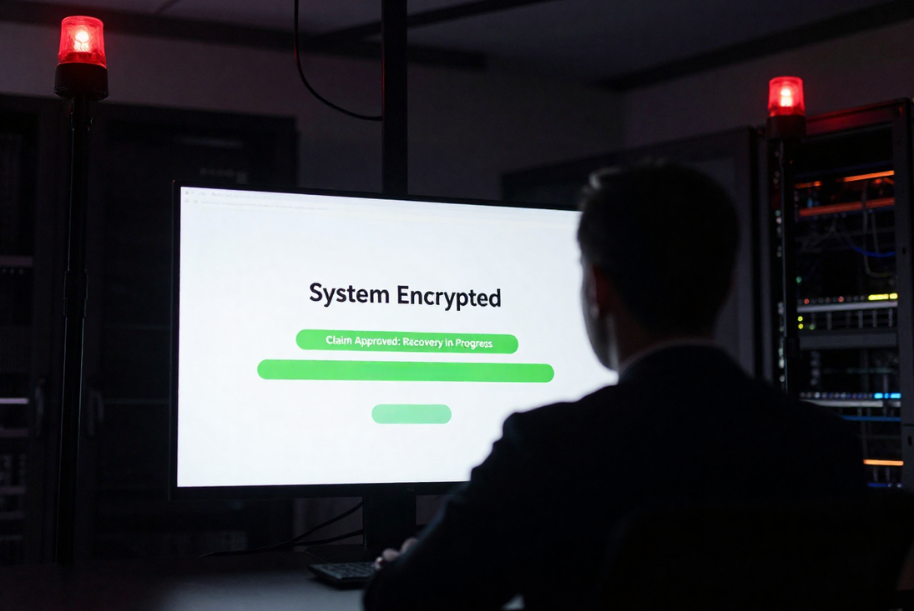
Not all cyber insurance claims are accepted. Common reasons include:
Why are claims getting declined?
- Inadequate cybersecurity controls
- Failure to update software
- Incorrect policy disclosure
- Choosing the cheapest cover only
- Uncovered system types
This highlights the importance of carefully comparing cyber insurance policies rather than focusing solely on price.
We have put together a guide explaining common cyber insurance exclusions. Read it here.
How Much Does Cyber Insurance Cost for Healthcare Businesses?
Cyber insurance cost for healthcare in Australia varies depending on:
Pricing factors
- Business size and revenue
- Type of healthcare services
- Volume of patient data
- Cybersecurity controls
- Claims history
Small clinics may pay a few hundred dollars monthly, while larger medical centres require tailored policies. Obtaining a cyber insurance quote for a medical practice through a broker ensures accurate pricing and appropriate coverage.
How Global Insurance Solutions Supports Healthcare Businesses?

As an award-recognised insurance broker in Australia, Global Insurance Solutions specialises in arranging cyber insurance for healthcare providers, clinics, medical practices and allied health businesses.
We work with leading insurers to:
- Identify cyber exposure gaps
- Structure-tailored cyber insurance cover
- Compare policies beyond price
- Support clients at claim time
FAQs
Q1. Do healthcare providers need cyber insurance in Australia?
Yes. Healthcare businesses handle sensitive patient data and face strict privacy regulations. Cyber insurance helps cover breach costs, legal expenses and downtime losses.
Q2. What does cyber insurance cover for medical practices?
It can cover data breaches, ransomware, business interruption, legal costs, notification expenses and IT recovery following a cyber incident.
Q3. Is cyber insurance mandatory for healthcare businesses?
It is not legally mandatory, but many healthcare providers now consider it essential due to rising cyber attacks and compliance obligations.
Q4. How quickly can a medical practice recover after a cyber attack?
With the right cyber insurance and incident response support, many practices restore operations faster and reduce financial losses significantly.
Q5. Does professional indemnity cover cyber attacks?
Generally no. Professional indemnity covers professional negligence, while cyber insurance covers data breaches and cyber incidents.
Speak to us!
If your healthcare business stores patient data, the risk of a cyber incident is real.
Speak to Global Insurance Solutions to review your cyber risk exposure and arrange tailored cyber insurance for healthcare in Australia.
Important notice
This article is of a general nature only and does not take into account your specific objectives, financial situation or needs. It is also not financial advice, nor complete, so please discuss the full details with your insurance broker as to whether these types of insurance are appropriate for you. Deductibles, exclusions and limits apply. You should consider any relevant Target Market Determination and Product Disclosure Statement in deciding whether to buy or renew these types of insurance. Various insurers issue these types of insurance and cover can differ between insurers.
This article provides information rather than financial product or other advice. The content of this article, including any information contained in it, has been prepared without taking into account your objectives, financial situation or needs. You should consider the appropriateness of the information, taking these matters into account, before you act on any information. In particular, you should review the product disclosure statement for any product that the information relates to it before acquiring the product.
Information is current as at the date the article is written as specified within it but is subject to change. Global Insurance Solutions Pty Ltd make no representation as to the accuracy or completeness of the information. Various third parties have contributed to the production of this content. All information is subject to copyright and may not be reproduced without the prior written consent of Global Insurance Solutions Pty Ltd.

Risk Advisor, Insurance Broker & Director
With around 15 years in insurance, Yuvi Singh is a passionate Risk Advisor, Director, and Insurance Broker at Global Insurance Solutions. Backed by a Commerce degree and ANZIIF diploma, Yuvi leads a team servicing SMEs across industries like manufacturing, logistics, fuel, IT, and more. At GIS, clients benefit from tailored, transparent advice, access to 150+ insurers, and end-to-end risk solutions. Recognised as a 2022 Insurance Magazine Rising Star and 2024 Top Insurance Broker by Insurance Business Australia, Yuvi delivers flexible, effective outcomes with integrity and innovation.