
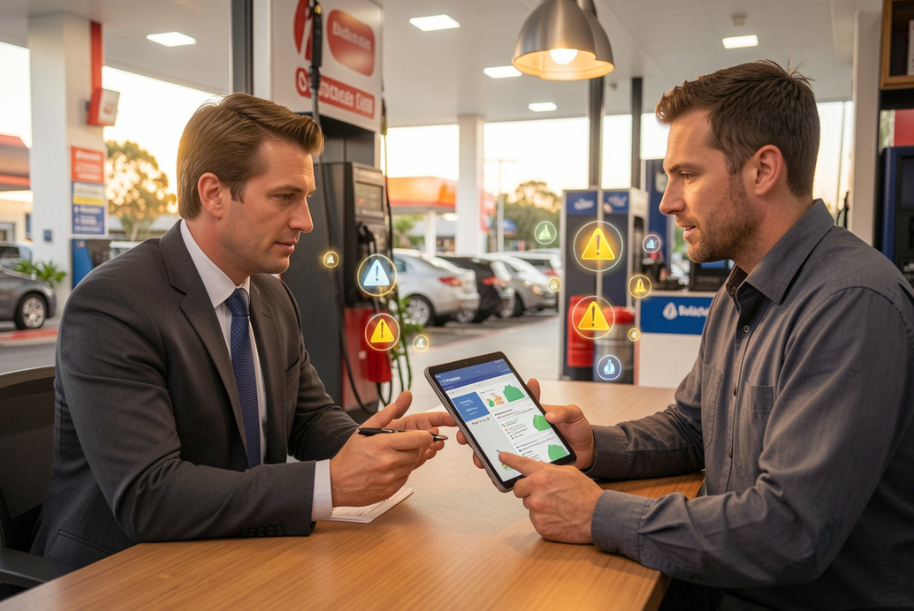
In 2026, the role of servo insurance brokers Australia, petrol station insurance broker specialists, and experts in servo insurance Australia has become more critical than ever.
From supply chain disruptions to cyber attacks and rising compliance pressures, fuel retailers across Australia are facing risks that standard insurance simply does not adequately address.
According to the IBM Cost of a Data Breach Report, the average cost of a data breach globally reached USD $4.45 million in 2023, highlighting the growing cyber exposure for businesses reliant on POS systems and digital infrastructure.
Source: https://www.ibm.com/reports/data-breach
At the same time, the Insurance Council of Australia (ICA) continues to highlight the growing issue of underinsurance, with many Australian businesses unknowingly exposed to financial shortfalls at claim time.
Source: https://insurancecouncil.com.au
The reality is simple: Most servo owners only discover policy gaps after a claim is denied.
This is exactly where working with a specialist insurance broker for petrol stations becomes not just valuable, but essential.
Why Servo Businesses Face Unique Risks Today?
Operating a service station in 2026 is no longer just about selling fuel. It involves managing a complex, high-risk environment.
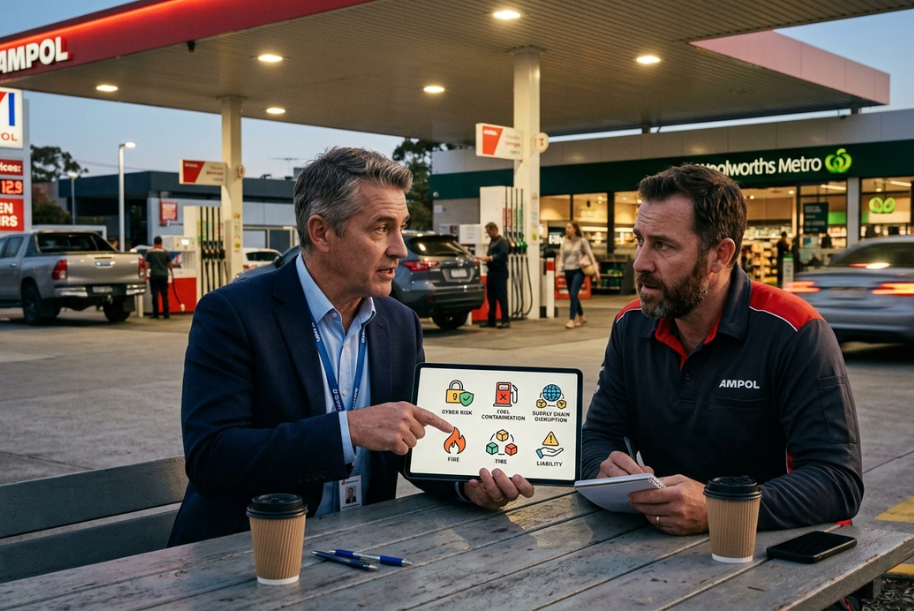
Key Risks Facing Petrol Stations
- Fuel contamination and environmental liability
- Cyber attacks on POS systems and fuel pumps
- Supply chain disruption and fuel shortages
- Power outages are impacting operations
- Public liability risks (slips, fires, accidents)
The Hidden Complexity
Servos combine:
- Retail operations
- Hazardous materials handling
- Logistics dependencies
- Technology systems
This makes them among the most complex risk profiles in Australian small-business insurance.
Why Standard Insurance Policies Often Fail?
Many servo operators believe they are covered under generic business insurance.
Unfortunately, this is one of the biggest misconceptions in the industry.
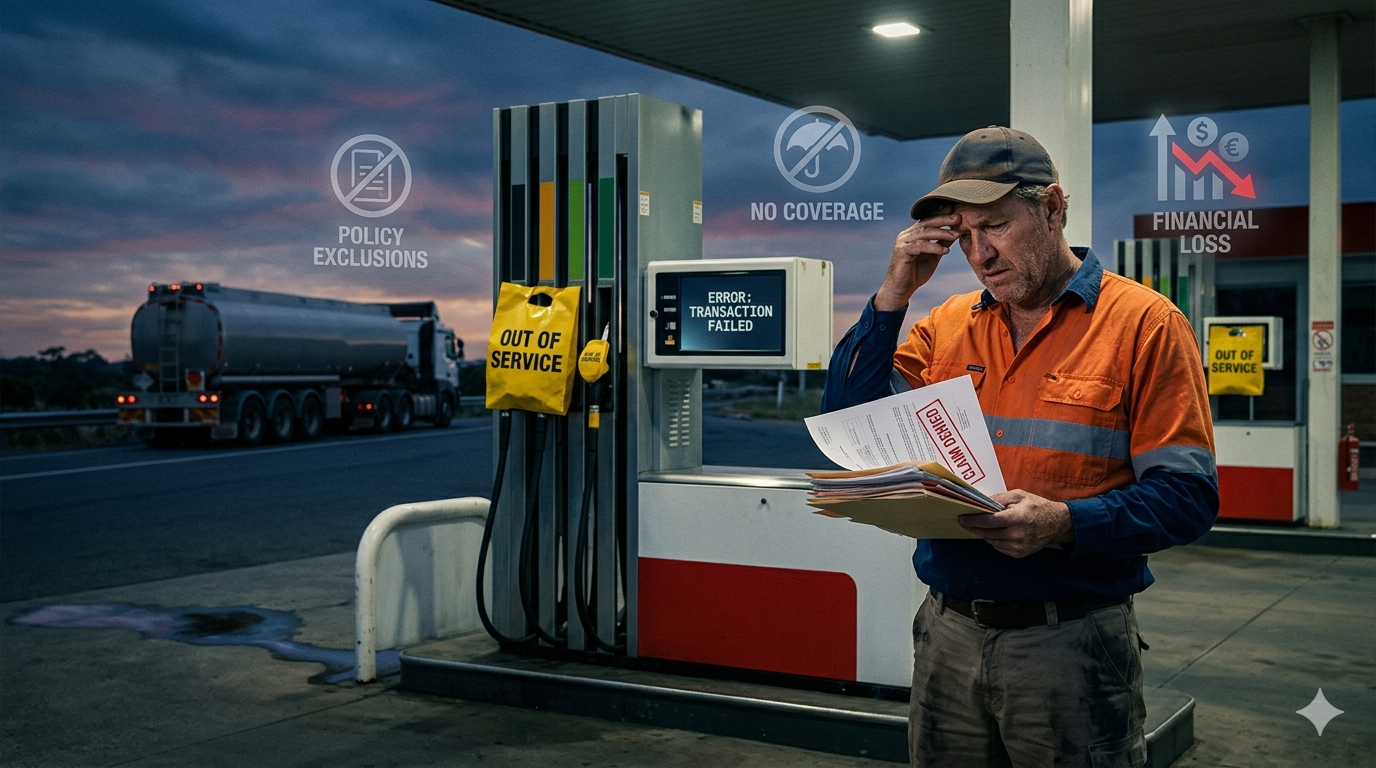
Common Coverage Gaps
- Business interruption without a valid trigger event
- Exclusions for fuel contamination
- Limited cyber coverage
- No protection for supply chain disruption
Real Problem
Standard policies are designed for low to medium-risk businesses, not high-risk environments like fuel stations.
The Cost of Getting It Wrong
- Claims denied due to exclusions
- Significant out-of-pocket losses
- Business closure risks
The Value of a Specialist Servo Insurance Broker
This is where a fuel station insurance specialist or service station insurance broker Australia becomes critical.
Policy Structuring for Real-World Risks
A specialist broker does not just sell insurance.
They:
- Assess operational risks
- Structure policies accordingly
- Ensure coverage aligns with real exposures
Access to 150+ Insurers
At Global Insurance Solutions, we provide access to 150+ insurer markets, allowing:
- Competitive pricing
- Broader coverage options
- Tailored policy wording
Why This Matters?
Not all insurers understand servo risks.
The difference between a direct insurer and a broker:
- Direct insurer = limited options
- Broker = multiple tailored solutions
Real Scenarios Where Broker Expertise Matters
Scenario 1 – Fuel Supply Disruption
A service station may be forced to shut down if fuel deliveries are delayed due to geopolitical conflict, shipping issues, or supplier shortages. Even though the business is losing revenue, this situation exposes one of the biggest misunderstandings around insurance.
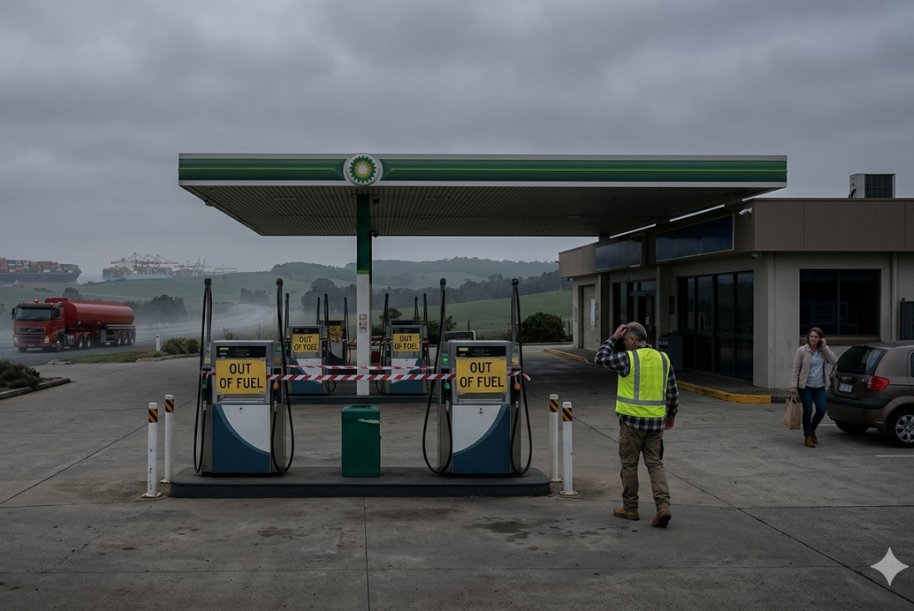
Most business interruption policies in Australia are designed to respond only when there is physical damage to insured property, such as fire or storm damage.
In a supply chain disruption scenario:
- There is no physical damage at the servo site
- The issue is external (supplier, transport, geopolitical event)
As a result, many standard policies:
- Do not cover loss of income from fuel shortages
- Will not trigger a claim without physical damage
Key takeaway: Just because your business cannot operate does not mean your insurance will respond. Supply chain risks often sit outside standard cover unless specific extensions or tailored policies are in place.
Scenario 2 – Cyber Attack Shutdown
If a cyberattack hits your servo and shuts down fuel pumps or POS systems, your business can come to a complete standstill, even without physical damage.
This is where many businesses get caught out.
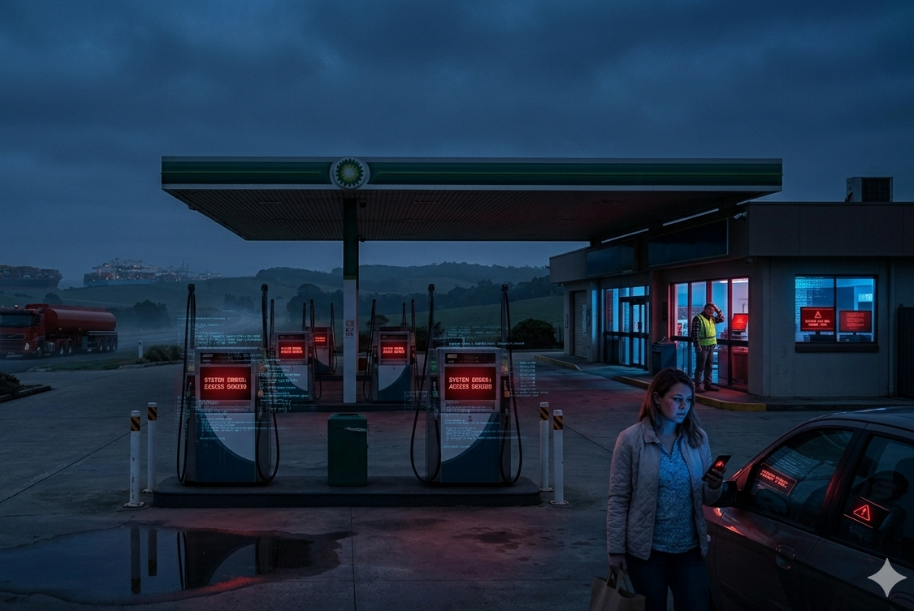
Standard business interruption insurance typically does NOT respond.
Because it usually requires physical damage (such as fire or a storm) to trigger a claim, not a digital or system failure.
Cyber insurance is what responds in this scenario
It is specifically designed to cover:
- Loss of income due to system outages
- Costs to restore systems and data
- Incident response, IT forensics, and recovery
Key takeaway: If your operations rely on technology (which most servos do), a cyber event can stop revenue instantly, but without cyber insurance, you may have no cover at all for that loss.
Scenario 3 – Power Outage (Electricity Failure)
If a power outage shuts down your servo, fuel pumps, refrigeration, and POS systems, operations can halt instantly.

Coverage is not automatic; whether your insurance responds depends on your policy’s structure.
Policy extensions matter: Some policies include extensions for:
- Loss of utilities (electricity, gas, water)
- Prevention of access or infrastructure failure
Without these extensions, there may be no cover for lost income.
Trigger definitions are critical: Even with extensions, insurers often require specific conditions, such as:
- Damage at the power supplier’s site
- Outage lasting beyond a minimum time (waiting period)
Key takeaway: Not all power outages are covered. The outcome depends on how your policy defines triggers and whether the right extensions are included.
Key Insights
Insurance policies are full of technical wording, conditions, and exclusions that are not always obvious to business owners.
Without a specialist broker:
- Critical gaps in cover can go unnoticed
- Key extensions may not be included
- Trigger conditions may not align with real-world risks
This often results in a harsh reality: a claim is denied simply because the policy was not structured correctly.
Key takeaway
A broker does not just arrange insurance. They ensure your cover actually responds when your business needs it most.
Hidden Exclusions That Could Cost You Thousands
This is the highest conversion risk area in servo insurance.
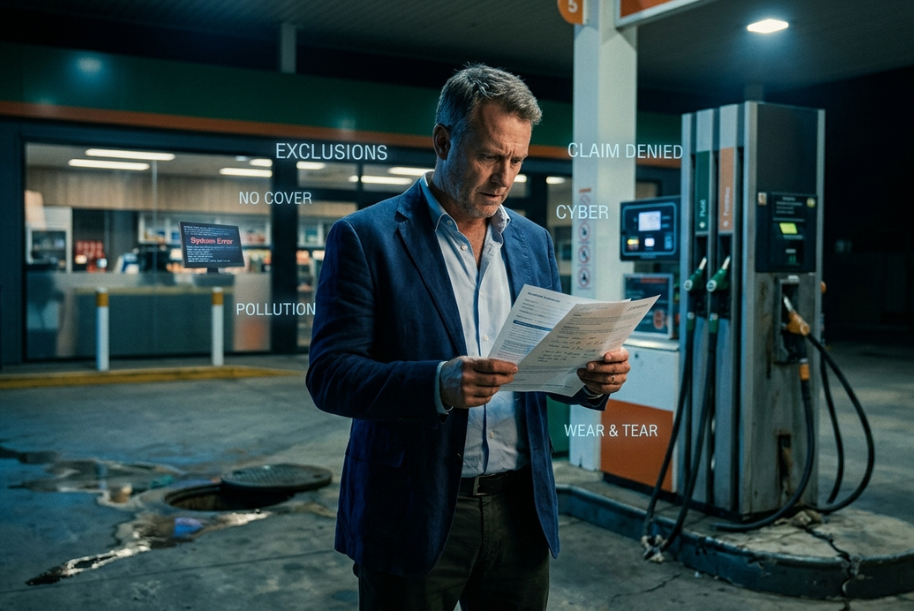
Common Hidden Exclusions
- Gradual pollution or contamination
- Wear and tear exclusions
- Cyber-related exclusions
- Non-physical damage BI exclusions
Why This Matters?
According to ASIC, many disputes arise due to:
- Misunderstanding policy wording
- Lack of professional advice
Source: https://asic.gov.au
Why Access to 150+ Insurers Changes Everything?
Broader Market Access
With a specialist insurance broker in Australia, you get:
- Multiple insurer comparisons
- Customised risk solutions
- Industry-specific underwriting
Better Outcomes
- Improved coverage
- Reduced exclusions
- Competitive premiums
This is especially important for high-risk industries like petrol stations.
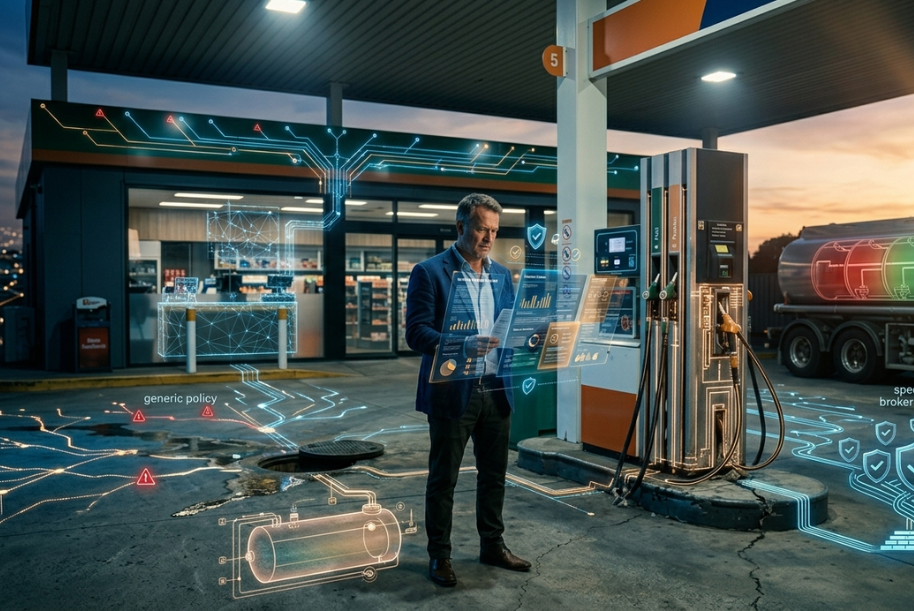
Claims Advocacy When It Matters Most
The true value of a broker is realised at claim time.
What Happens Without a Broker?
- Insurers assess claims independently
- Limited support for disputes
- Higher chance of reduced payouts
With Global Insurance Solutions
We:
- Advocate on your behalf
- Interpret policy wording
- Push for fair claim outcomes
Real Impact
👉 Faster claims
👉 Better settlements
👉 Reduced stress
Broker vs Direct Insurer – What’s the Difference?
Feature | Direct Insurer | Broker |
Policy options | Limited | Multiple insurers |
Risk advice | General | Specialised |
Claims support | Minimal | Full advocacy |
Customisation | Low | High |
What Insurance Does a Servo Need in Australia?
A typical petrol station insurance program may include:
Core Covers
- Public liability insurance
- Property and ISR insurance
- Business interruption insurance
Specialist Covers
- Environmental liability
- Cyber insurance
- Machinery breakdown
Every policy should be tailored, not templated.
How to Choose the Right Servo Insurance Broker?
Key Factors
- Experience in petrol station insurance
- Access to multiple insurers
- Claims advocacy capability
- Understanding of industry risks
Red Flag: If your broker treats your servo like a retail shop, you likely have coverage gaps.
Final Thoughts – Why It Matters in 2026?
The insurance landscape is changing rapidly.
With:
- Global supply chain instability
- Rising cyber threats
- Increasing regulatory pressure
The cost of being underinsured has never been higher.
At Global Insurance Solutions, we specialise in helping fuel retailers across Australia navigate these complexities with confidence.
Don’t wait for a claim to discover gaps in your policy.
Get a tailored servo insurance quote in Australia
Visit 🌐www.globalinsurancesolutions.com.au
Speak with a specialist petrol station insurance broker today!
FAQs (People Also Asked)
Q1. Do petrol stations need insurance in Australia?
Ans 1. Yes. Petrol stations require multiple insurance covers, including public liability, property, business interruption, and environmental liability, given their high-risk operations.
Q2. What insurance does a servo need?
Ans 2. A servo typically needs public liability, property damage, business interruption, cyber, and environmental liability coverage tailored to fuel-related risks.
Q3. Why use an insurance broker instead of a direct insurer?
Ans 3. A broker provides access to multiple insurers, tailored advice, and claims support, whereas direct insurers offer limited, standardised policies.
Q4. What does business interruption insurance cover in Australia?
Ans 4. It covers loss of income resulting from insured events, typically requiring physical damage unless extensions are included.
Q5. How to choose an insurance broker in Australia?
Ans 5. Look for industry expertise, insurer access, claims advocacy, and a proven track record in your specific sector.
Important notice
This article is of a general nature only and does not take into account your specific objectives, financial situation or needs. It is also not financial advice, nor complete, so please discuss the full details with your insurance broker as to whether these types of insurance are appropriate for you. Deductibles, exclusions and limits apply. You should consider any relevant Target Market Determination and Product Disclosure Statement in deciding whether to buy or renew these types of insurance. Various insurers issue these types of insurance and cover can differ between insurers.
This article provides information rather than financial product or other advice. The content of this article, including any information contained in it, has been prepared without taking into account your objectives, financial situation or needs. You should consider the appropriateness of the information, taking these matters into account, before you act on any information. In particular, you should review the product disclosure statement for any product that the information relates to it before acquiring the product.
Information is current as at the date the article is written as specified within it but is subject to change. Global Insurance Solutions Pty Ltd make no representation as to the accuracy or completeness of the information. Various third parties have contributed to the production of this content. All information is subject to copyright and may not be reproduced without the prior written consent of Global Insurance Solutions Pty Ltd.

Risk Advisor, Insurance Broker & Director
With around 15 years in insurance, Yuvi Singh is a passionate Risk Advisor, Director, and Insurance Broker at Global Insurance Solutions. Backed by a Commerce degree and ANZIIF diploma, Yuvi leads a team servicing SMEs across industries like manufacturing, logistics, fuel, IT, and more. At GIS, clients benefit from tailored, transparent advice, access to 150+ insurers, and end-to-end risk solutions. Recognised as a 2022 Insurance Magazine Rising Star and 2024 Top Insurance Broker by Insurance Business Australia, Yuvi delivers flexible, effective outcomes with integrity and innovation.