
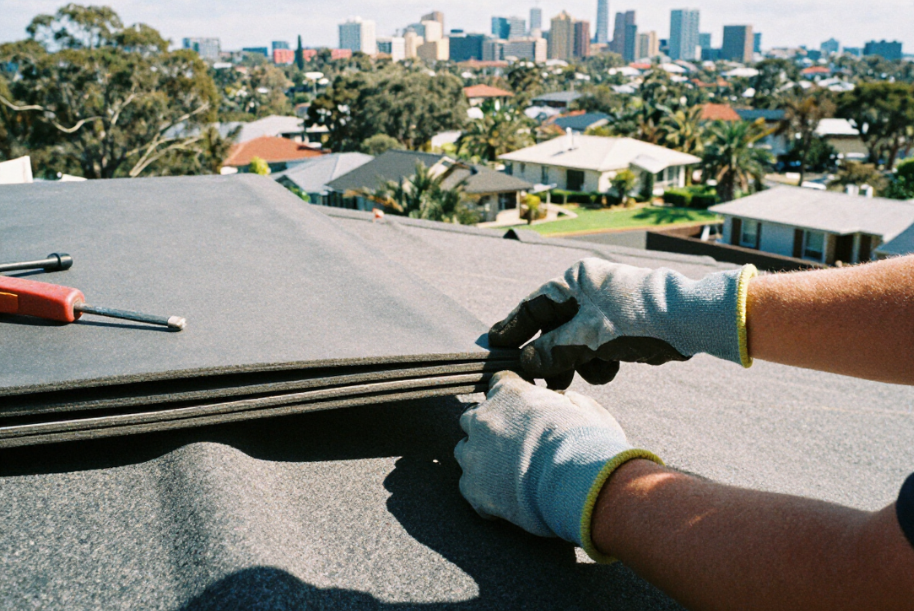
Running a roofing business in Australia comes with real risk. Working at heights, handling heavy materials, managing subcontractors, and operating on active residential and commercial sites means even a small mistake can turn into a serious claim.
At Global Insurance Solutions, we work closely with roofers across Australia to structure roofing insurance that actually responds when things go wrong, not generic policies that leave gaps.
This guide breaks down roofers’ insurance, explains what cover matters most, and helps you understand how to protect your business properly.
What Is Roofing Insurance and Why Is It Essential for Roofers?
Roofing insurance is not a single policy. It is a tailored insurance designed to protect roofing contractors against financial loss arising from accidents, property damage, legal claims, and faulty workmanship.

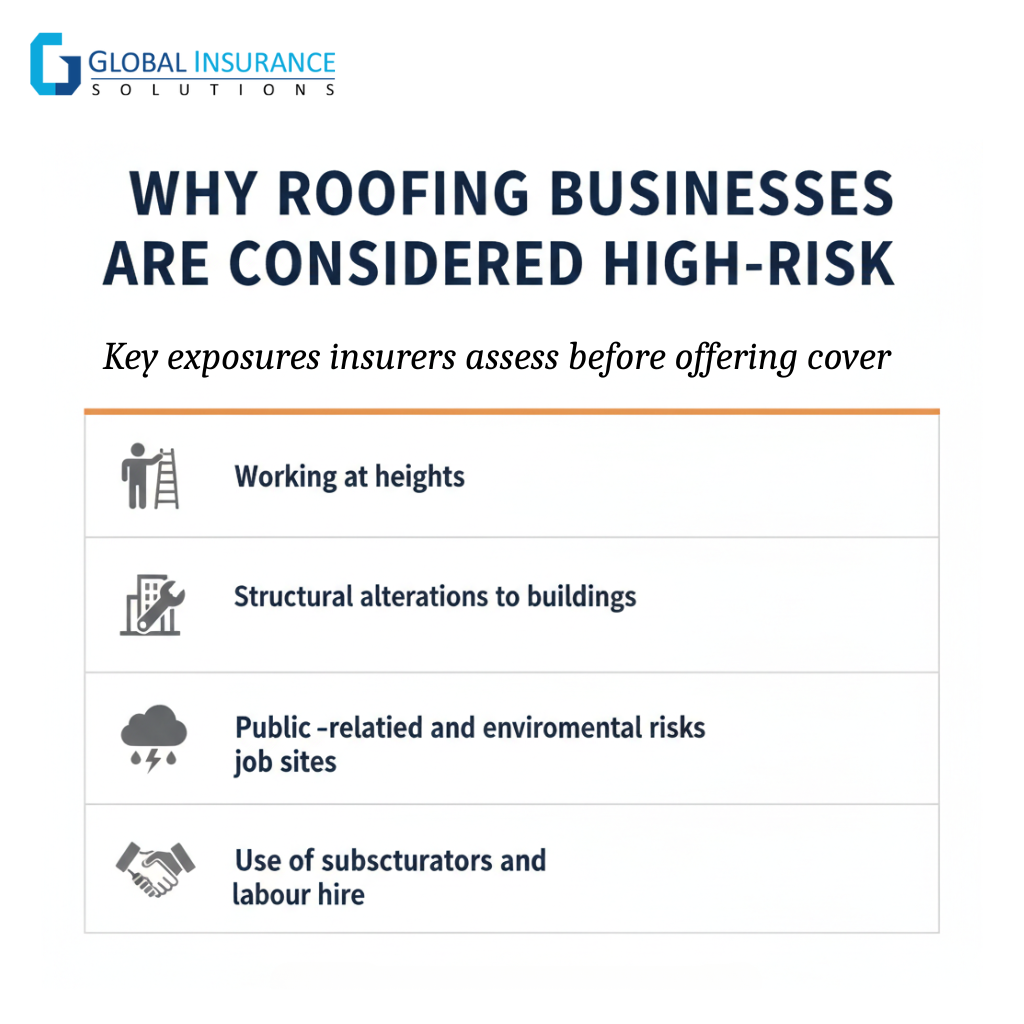
Roofers face higher-than-average exposure due to:
- Working at heights
- Structural alterations to buildings
- Public interaction on job sites
- Weather-related risks
- Use of subcontractors and labour hire
Without the right insurance for roofers, one incident can:
- Trigger legal action
- Delay projects
- Void contracts
- Put personal assets at risk
Essential Roofers Insurance: A Breakdown of Core Coverages
1. Roofers Public Liability Insurance
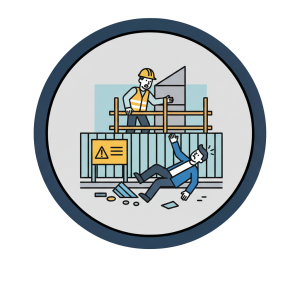
Roofers’ public liability insurance is the foundation of any roofing business insurance setup. It protects you if your work causes injury or property damage to a third party.
This includes:
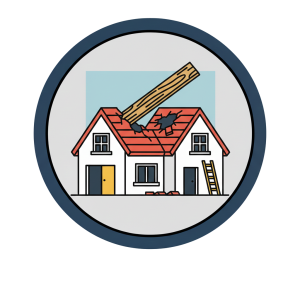
- Falling materials injured a client

- Damage to neighbouring properties
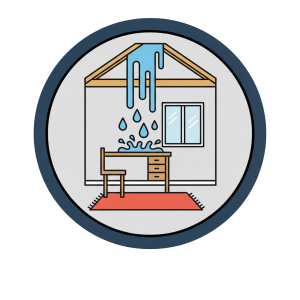
- Water ingress caused by incomplete roofing work
- Injury to members of the public near the worksite
Most Australian builders, councils, and developers require public liability for roofers as a minimum contract condition.
2. Insurance for Roofing Business Owners and Contractors
Insurance for roofing business owners must account for how the business operates, not just the tools used.
This includes:
- Sole traders
- Pty Ltd companies
- Subcontractor-heavy operations
- Commercial and residential roofing contractors
A properly structured roofing business insurance policy considers:
- Annual turnover
- Number of workers
- Type of roofing services
- Job site exposure
- Height limits and safety systems
Roofing Company Insurance for Residential and Commercial Work
1. Residential Roofing Insurance
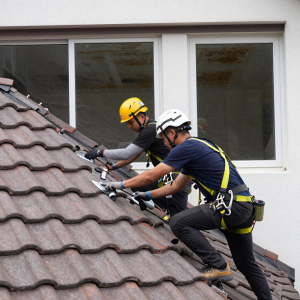
Residential roofing insurance is designed for roofers working on homes, units, and townhouses.
Common risks include:
- Damage to internal ceilings and contents
- Injury to occupants
- Weather exposure during roof replacement
- Faulty flashing or tile installation
Residential work often involves a high frequency of claims, even if the claim values are relatively small.
Commercial Roofing Insurance
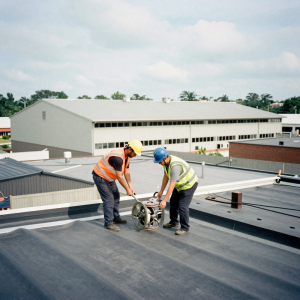
Commercial roofing insurance applies to larger buildings, such as: Warehouses, Factories, Shopping centres, and Office buildings.
Commercial jobs typically involve:
- Higher contract values
- Longer project durations
- More complex liability chains
This is where commercial roofing contractor insurance becomes critical, especially when principal contractors push risk downstream.
Specialised Roofing Insurance by Service Type
a) Metal Roofing Insurance
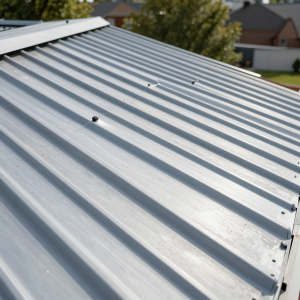
Metal roofing insurance is essential because of the unique risks involved in this type of work, including heat expansion that can affect roof performance, fixing failures, sharp material hazards, and potential issues with structural integrity that may lead to damage or injury claims. Claims often involve water ingress or detachment during extreme weather.
b) Tile Roofing Insurance
Tile roofing insurance is designed to address the specific risks associated with tiled roofs, including breakage during installation, incorrect load distribution, potential roof collapse, and leaks caused by displaced or damaged tiles. Tile roofs generate frequent damage claims, especially during repairs.

c) Roof Repair Insurance
Roof repair insurance is critical for contractors who carry out emergency repairs, storm damage fixes, and insurance claim work, as these jobs often involve higher-risk conditions, tight timeframes, and greater exposure to liability claims. Short-term repairs still carry long-term liability exposure.
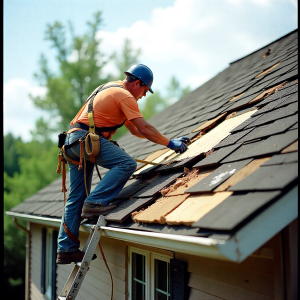
d) Roof Replacement Insurance
Roof replacement insurance covers full strip and replace projects where exposure increases due to:
- Temporary roof removal
- Weather damage during works
- Extended project timelines
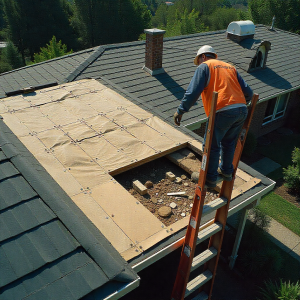
e) Roofing Maintenance Insurance
Roofing maintenance insurance applies to:
- Ongoing service contracts
- Scheduled inspections
- Gutter and drainage maintenance
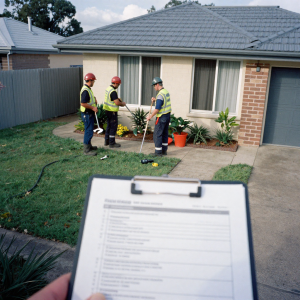
Maintenance work often triggers claims when pre-existing damage is uncovered.
Insured Roofer vs Insured Roofing Contractor: Why It Matters
Being an insured roofer is not the same as being an insured roofing contractor with the right cover limits and policy extensions.
Key differences include:
- Correct activity declarations
- Height restrictions
- Inclusion of subcontractors
- Completed works cover
- Contractual liability clauses
An incorrectly declared policy can result in claim denial, even if premiums were paid.
e) Roofing Maintenance Insurance
Insurance requirements for roofing contractors vary depending on:
- State regulations
- Builder licensing bodies
- Contract terms
- Principal contractor requirements
Common requirements include:
Roofing Contractors Insurance Melbourne and Nationwide Coverage
Roofing contractors operating in Victoria face additional compliance pressure, especially for commercial and strata projects.
Roofing contractors’ insurance in Melbourne often requires:
- Higher liability limits
- Proof of subcontractor insurance
- Contractual indemnity extensions
We also structure insurance for roofing contractors operating across multiple states with consistent coverage.
How Global Insurance Solutions Helps Roofing Contractors Get It Right
At Global Insurance Solutions, we specialise in roofing insurance Australia for:
- Residential roofers
- Commercial roofing contractors
- Metal and tile specialists
- Maintenance and repair businesses
Our approach focuses on:
- Understanding how you actually work
- Identifying hidden liability gaps
- Aligning insurance with contracts
- Supporting claims from start to finish
Frequently Asked Questions (FAQs)
Q1. Is public liability insurance mandatory for roofers in Australia?
While not legally mandatory in every state, roofers’ public liability insurance is required by most clients, councils, and builders before work can commence.
Q2. Does roofing insurance cover faulty workmanship?
Public liability may respond to resulting damage, but faulty workmanship itself is often excluded. This is why the correct roofing contractor liability insurance structure matters.
Q3. Can subcontractors be covered under my roofing insurance?
Only if they are correctly declared. Many policies exclude labour-only subcontractors unless specifically endorsed.
Q4. Does roofing insurance cover storm damage claims?
It can, but only if the damage is directly linked to your work and the policy is correctly structured for insurance claim roofing contractors.
Q5. What happens if my roofing business grows, but my insurance does not change?
Underinsurance is one of the biggest risks roofers face. Growth without policy updates can invalidate claims.
Explore: Machinery Breakdown Insurance | Worker’s Compensation Insurance
We also arrange: insurance for electrical contractors
Also Read: risks of being underinsured | Insurance insights for business
Important notice
This article is of a general nature only and does not take into account your specific objectives, financial situation or needs. It is also not financial advice, nor complete, so please discuss the full details with your insurance broker as to whether these types of insurance are appropriate for you. Deductibles, exclusions and limits apply. You should consider any relevant Target Market Determination and Product Disclosure Statement in deciding whether to buy or renew these types of insurance. Various insurers issue these types of insurance and cover can differ between insurers.
This article provides information rather than financial product or other advice. The content of this article, including any information contained in it, has been prepared without taking into account your objectives, financial situation or needs. You should consider the appropriateness of the information, taking these matters into account, before you act on any information. In particular, you should review the product disclosure statement for any product that the information relates to it before acquiring the product.
Information is current as at the date the article is written as specified within it but is subject to change. Global Insurance Solutions Pty Ltd make no representation as to the accuracy or completeness of the information. Various third parties have contributed to the production of this content. All information is subject to copyright and may not be reproduced without the prior written consent of Global Insurance Solutions Pty Ltd.

Risk Advisor, Insurance Broker & Director
With around 15 years in insurance, Yuvi Singh is a passionate Risk Advisor, Director, and Insurance Broker at Global Insurance Solutions. Backed by a Commerce degree and ANZIIF diploma, Yuvi leads a team servicing SMEs across industries like manufacturing, logistics, fuel, IT, and more. At GIS, clients benefit from tailored, transparent advice, access to 150+ insurers, and end-to-end risk solutions. Recognised as a 2022 Insurance Magazine Rising Star and 2024 Top Insurance Broker by Insurance Business Australia, Yuvi delivers flexible, effective outcomes with integrity and innovation.


